Architectural Concept and Exterior Expression
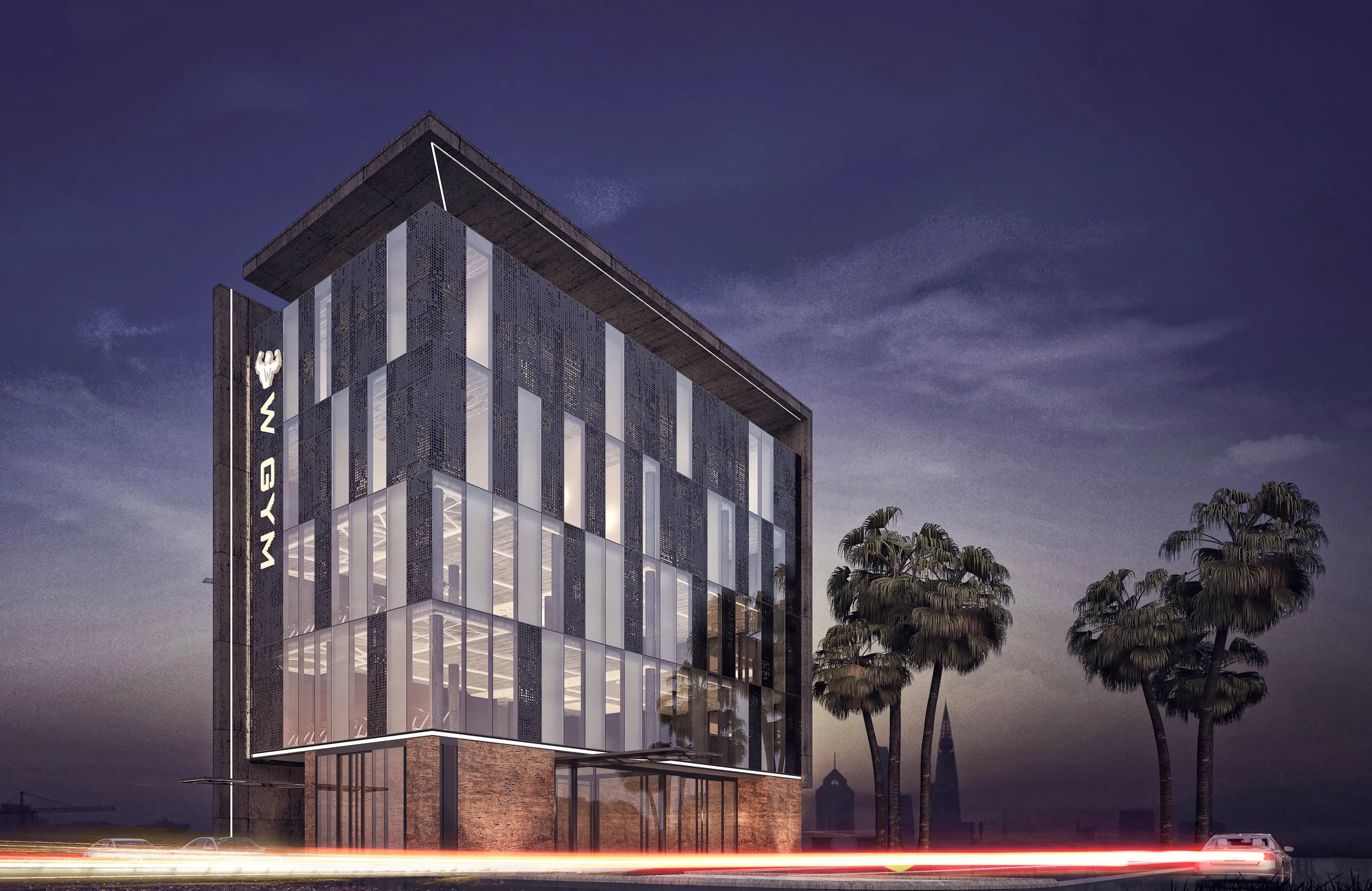
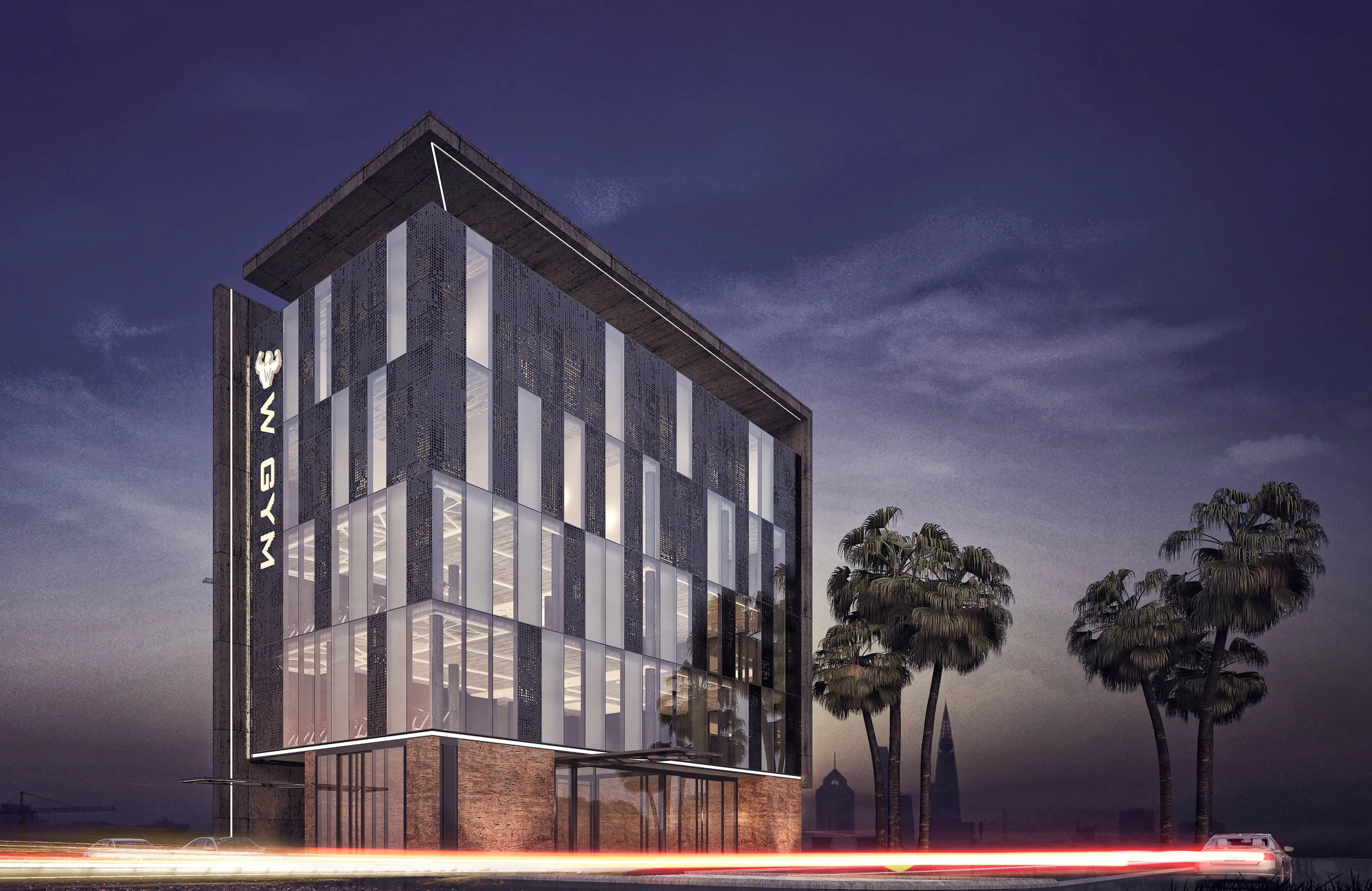
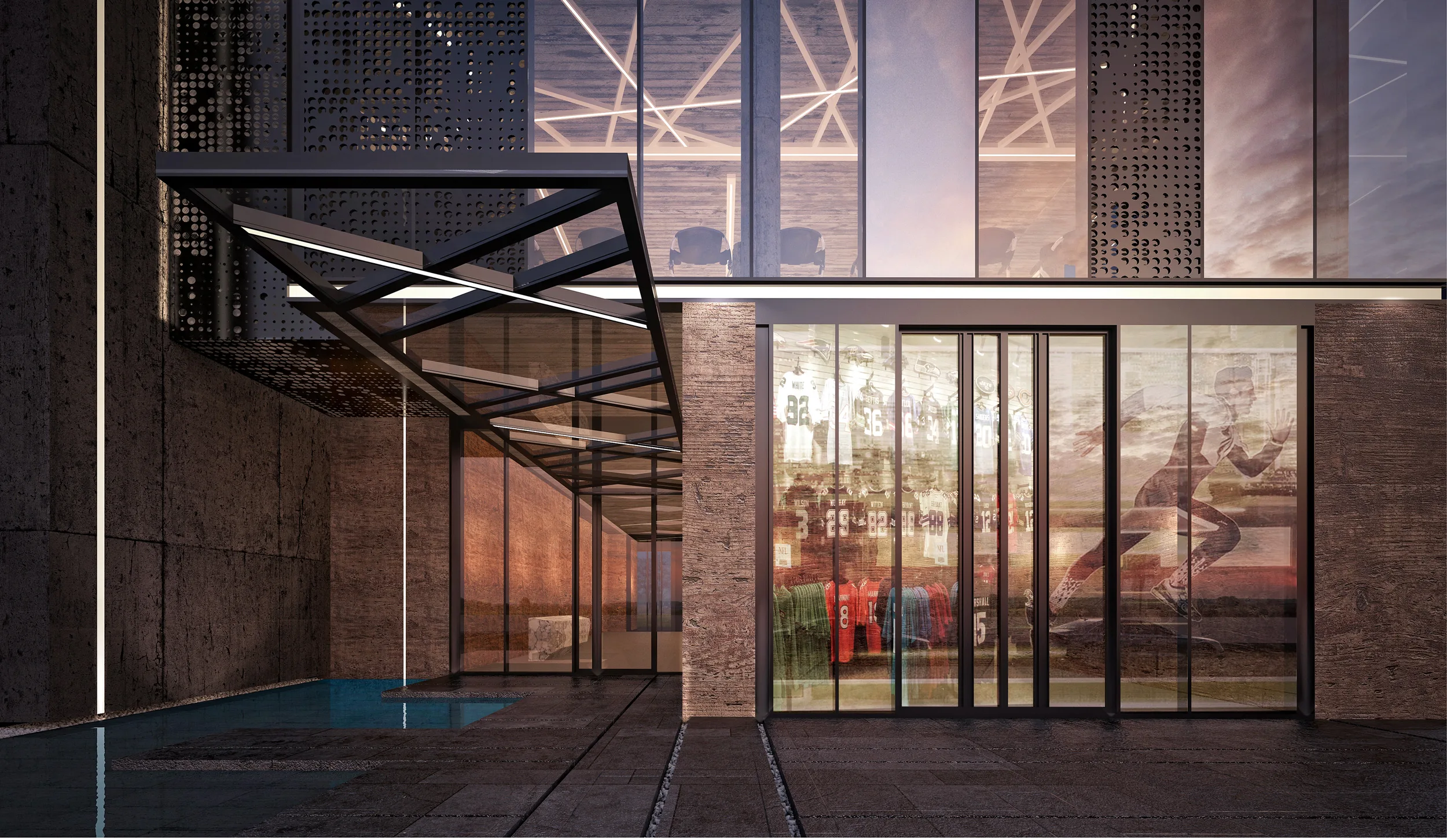
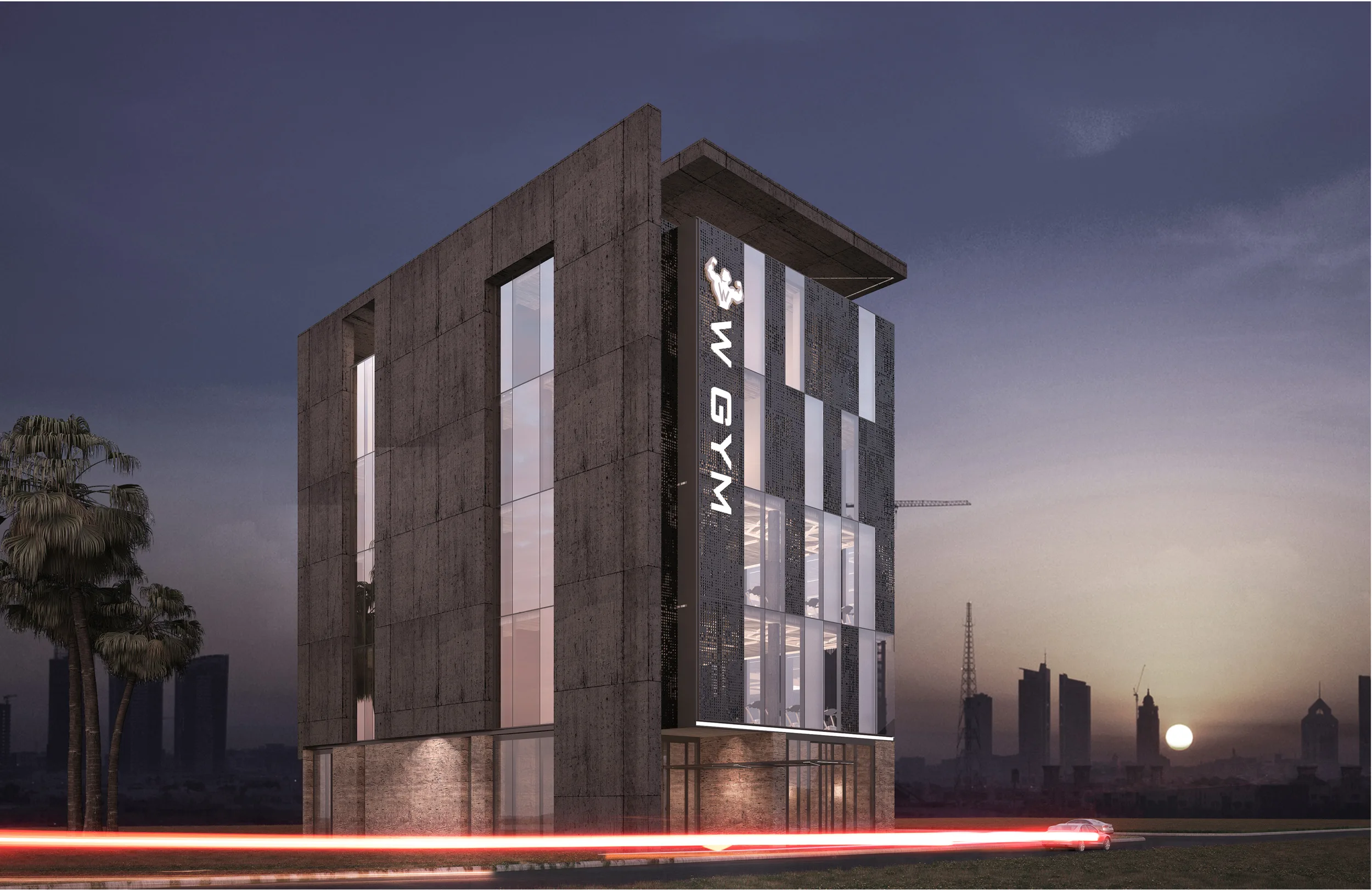
The design philosophy of W GYM centers on “Tectonic Transparency” and “Programmatic Layering.” Located in a dense urban context, the building is conceived as a monolithic volume wrapped in a high-performance glass curtain wall, punctuated by a rigid concrete frame. This juxtaposition creates a visual dialogue between the “heaviness” of the structure and the “lightness” of the interior voids. The facade utilizes vertical mullions and perforated metal screens to manage solar gain—a critical consideration in Kuwait’s climate—while maintaining a visual connection with the street. The entrance is marked by a dramatic cantilever and linear LED integration, leading visitors over a reflective water feature that serves as a sensory transition from the external heat to the controlled internal environment.
Spatial Organization and Programmatic Distribution
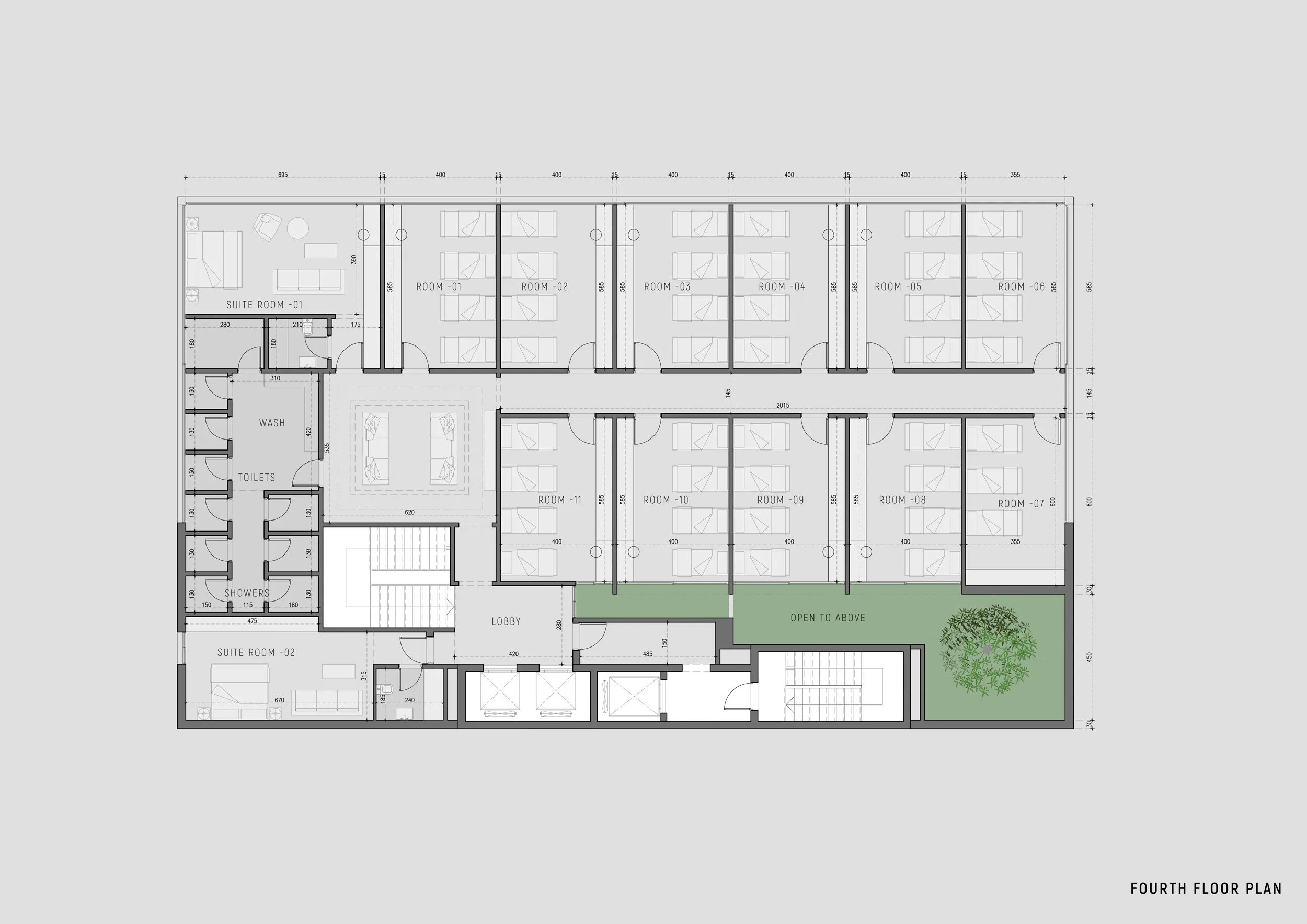
The project is organized across six levels, utilizing a vertical zoning strategy that separates high-energy training, social interaction, and administrative logistics:
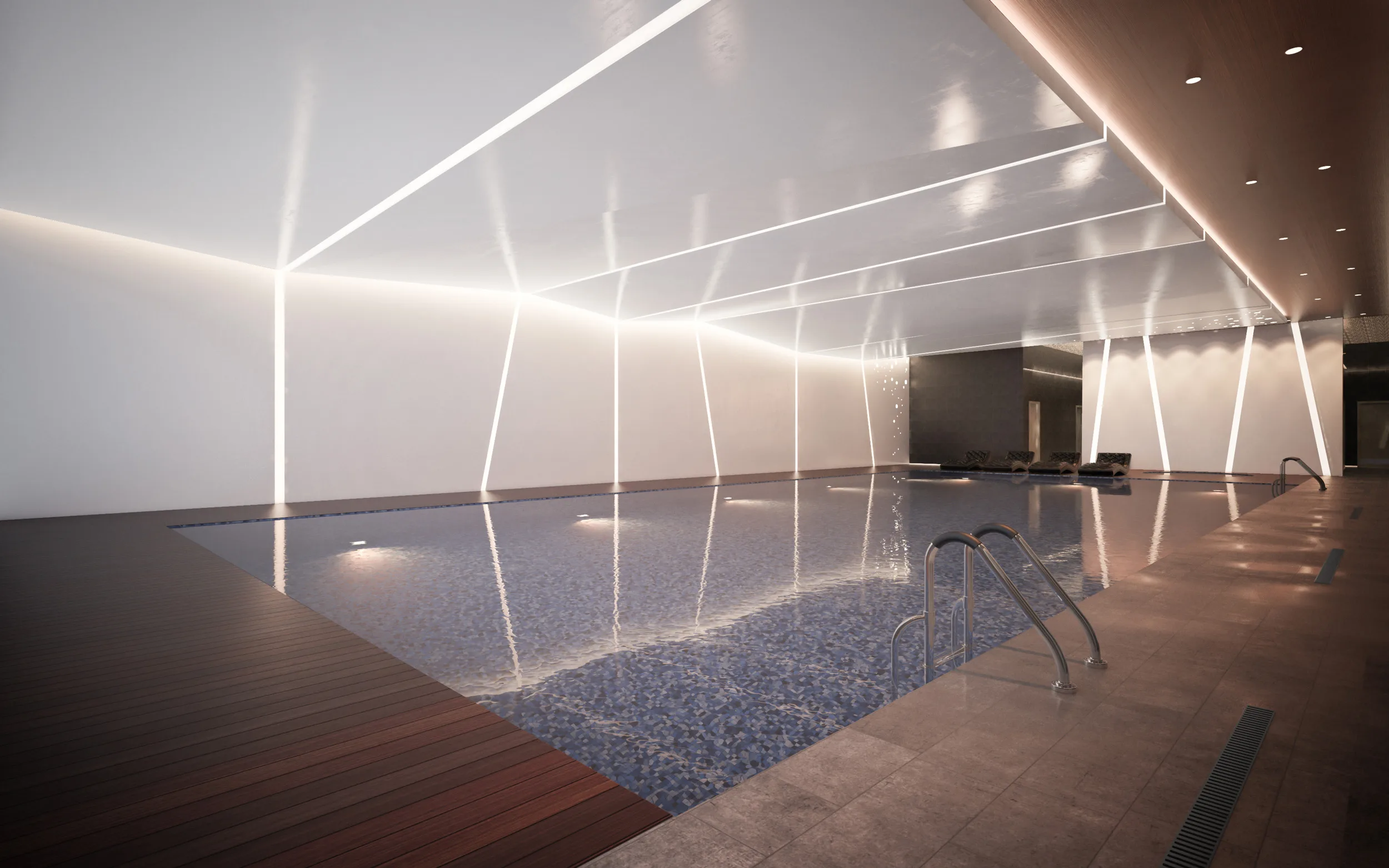
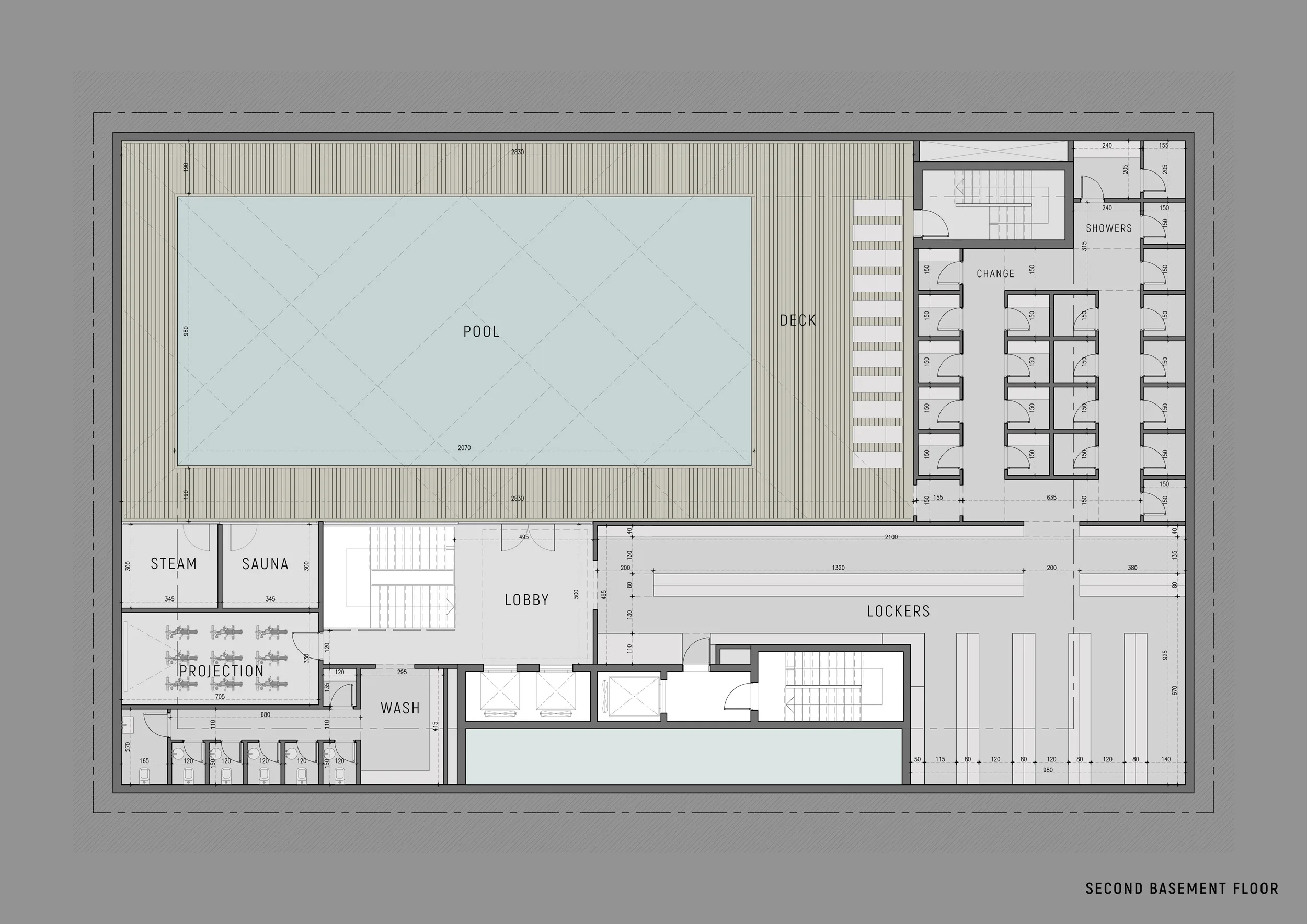
The Subterranean Wellness Sanctuary (B2): The lowermost level is dedicated to recovery. It features a minimalist lap pool defined by a rhythmic sequence of wall-integrated light coves and a warm timber deck. This level includes state-of-the-art steam and sauna rooms, prioritizing a serene, atmospheric quality through indirect lighting and a neutral material palette.
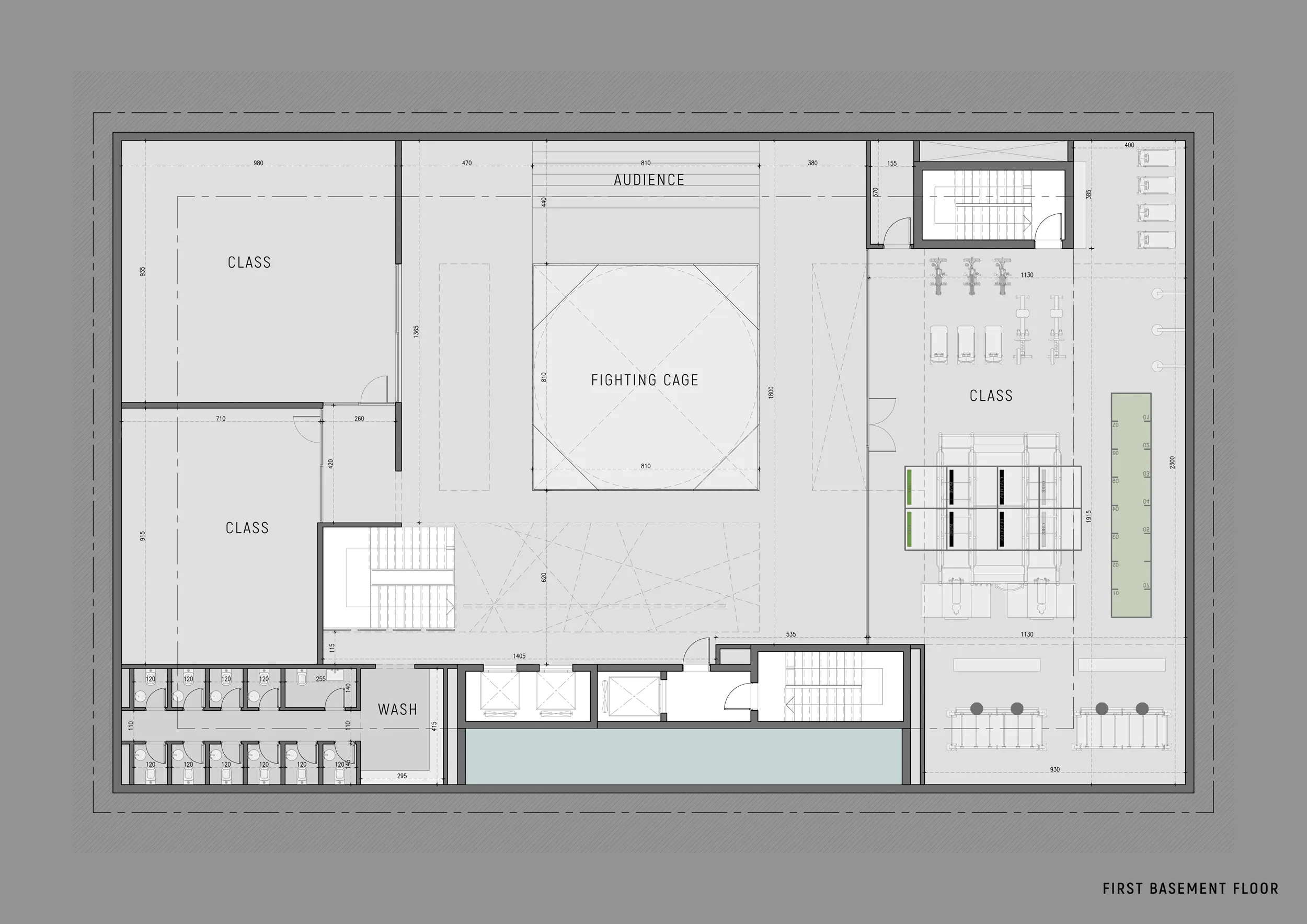
The Combat Arena (B1): Designed for high-intensity training, this level centers around a professional fighting cage and a tiered audience area. The spatial arrangement emphasizes the drama of the sport, utilizing a “void” that connects visually to the floors above, enhancing the sense of verticality.
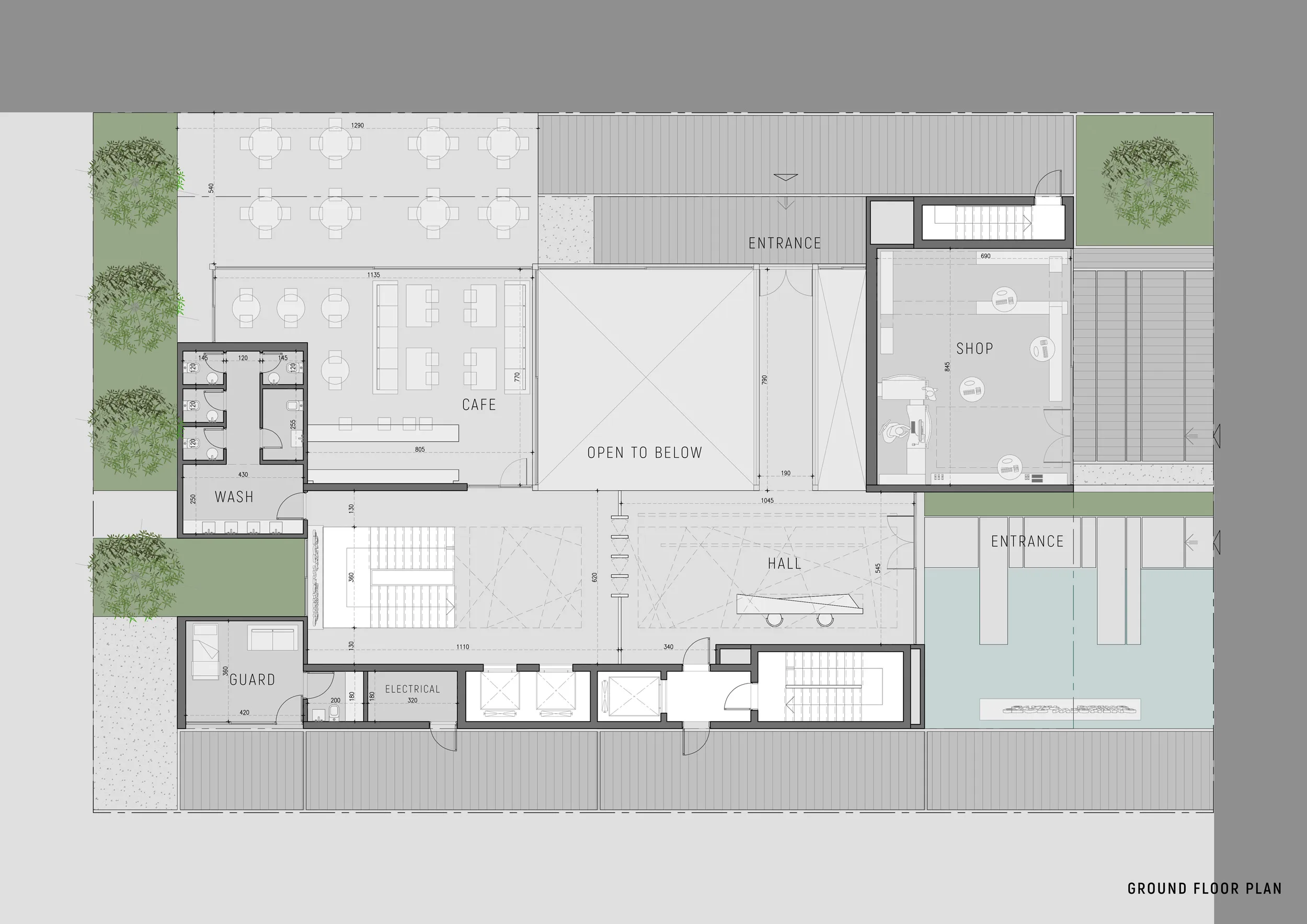
The Social Nexus (Ground Floor): This level acts as the building’s heart, housing the main reception lobby, a boutique retail shop, and a contemporary cafe. A central void (Open to Below) serves as a lung for the building, facilitating air circulation and visual transparency between the public and training zones.
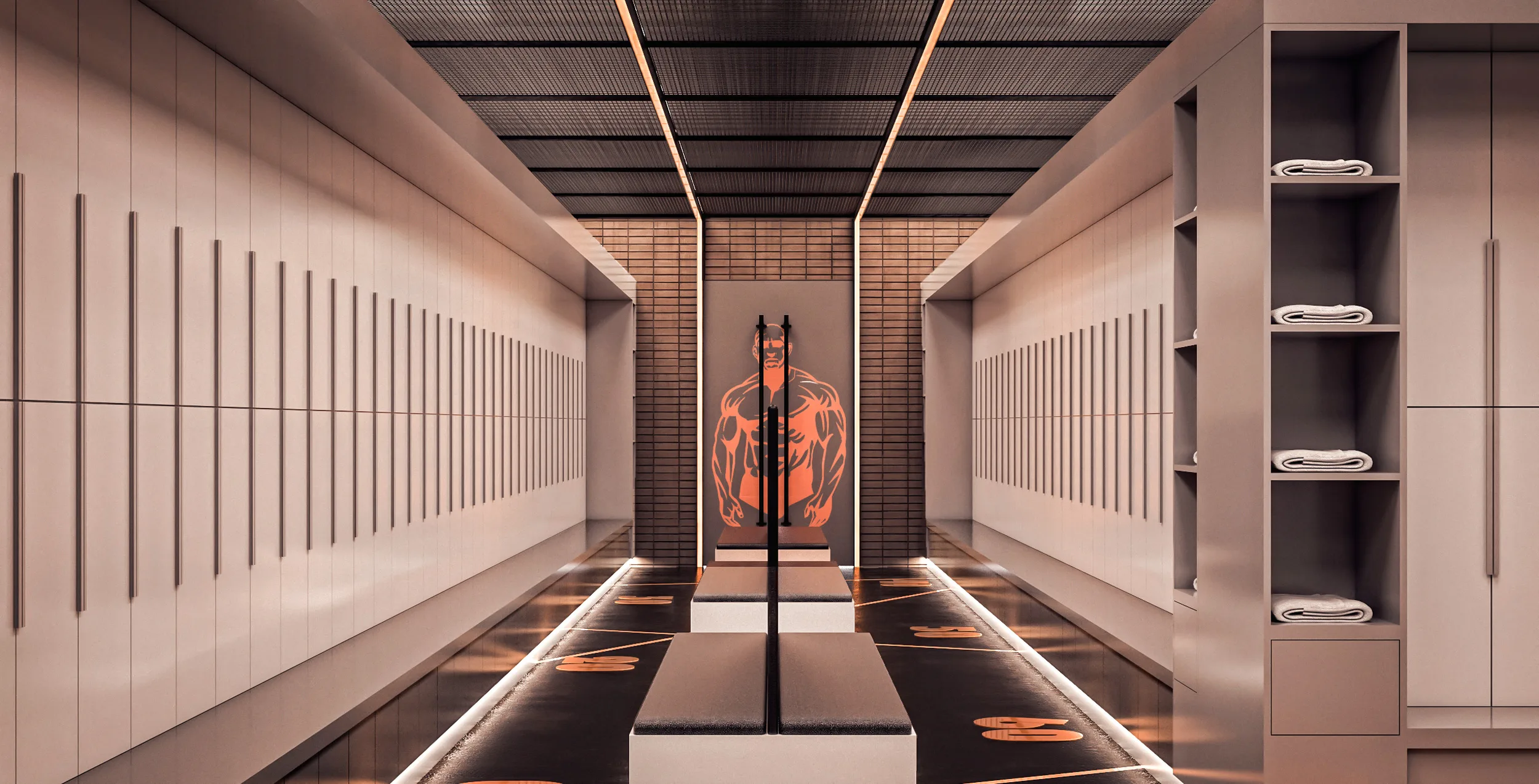
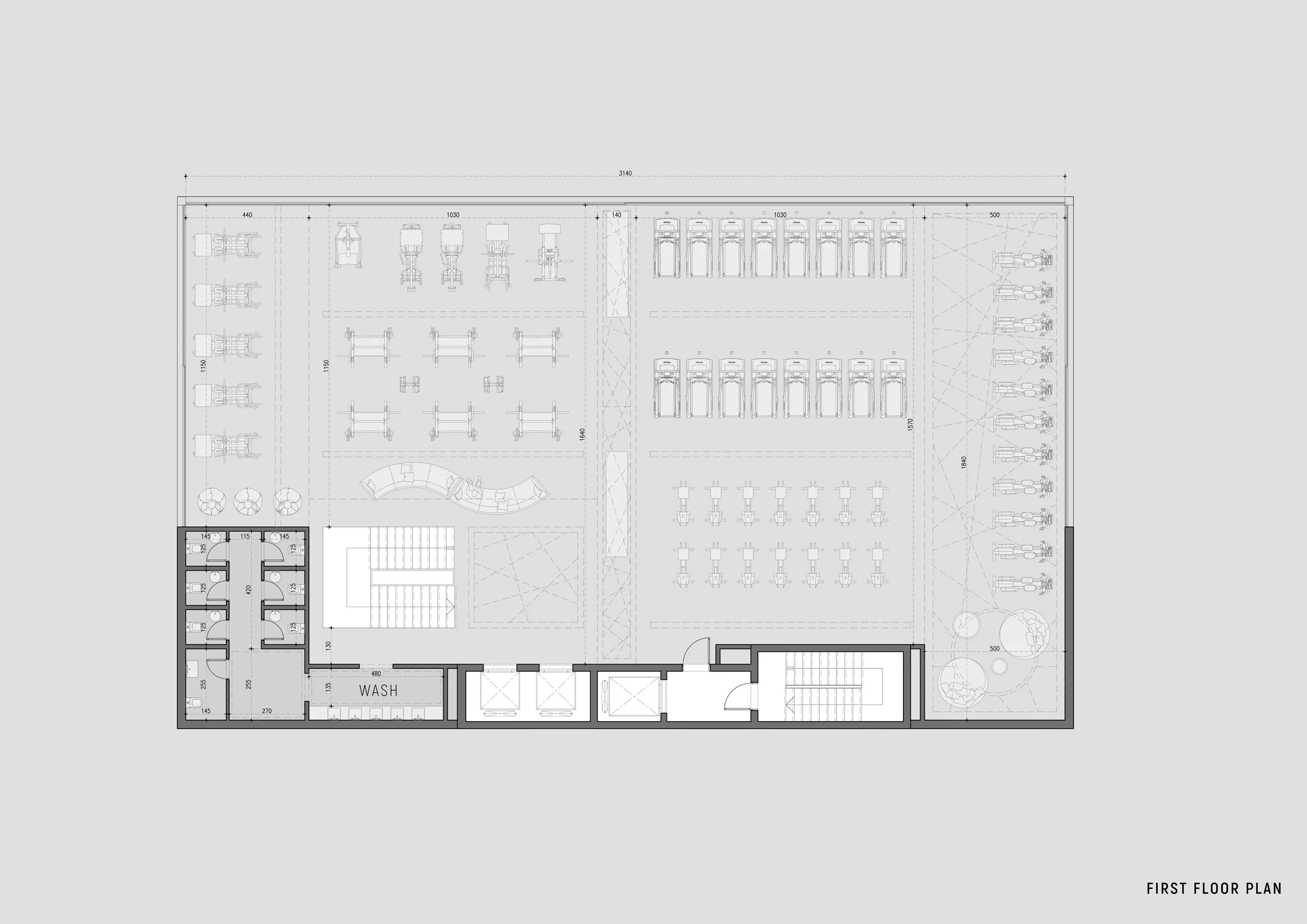
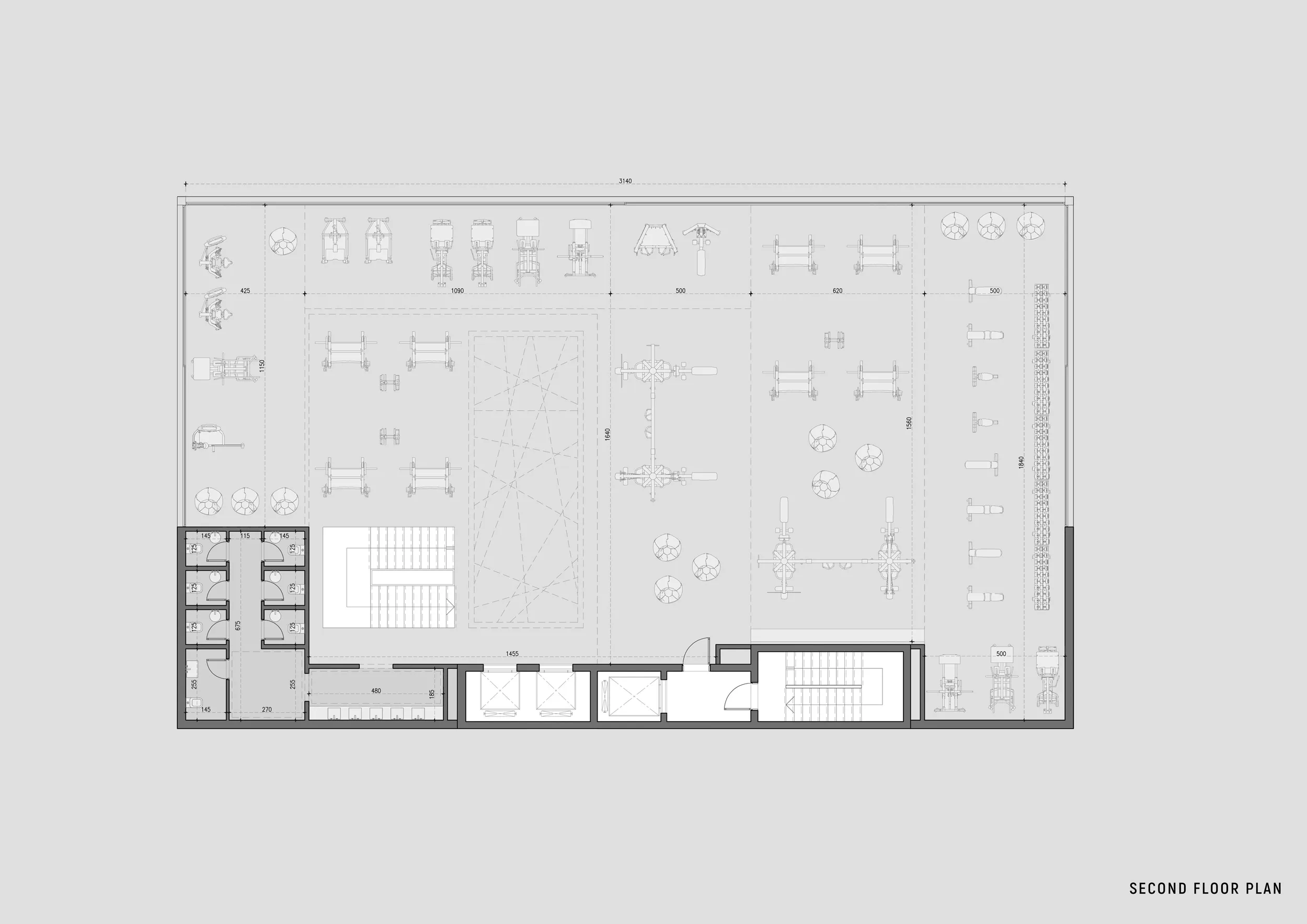
High-Performance Training Zones (1st & 2nd Floors): These levels utilize an open-plan configuration to maximize flexibility. The first floor focuses on cardio and functional movements, while the second floor is dedicated to heavy resistance training. The layout is engineered to optimize user flow, with dedicated “wash” zones and locker facilities strategically placed to minimize cross-traffic.
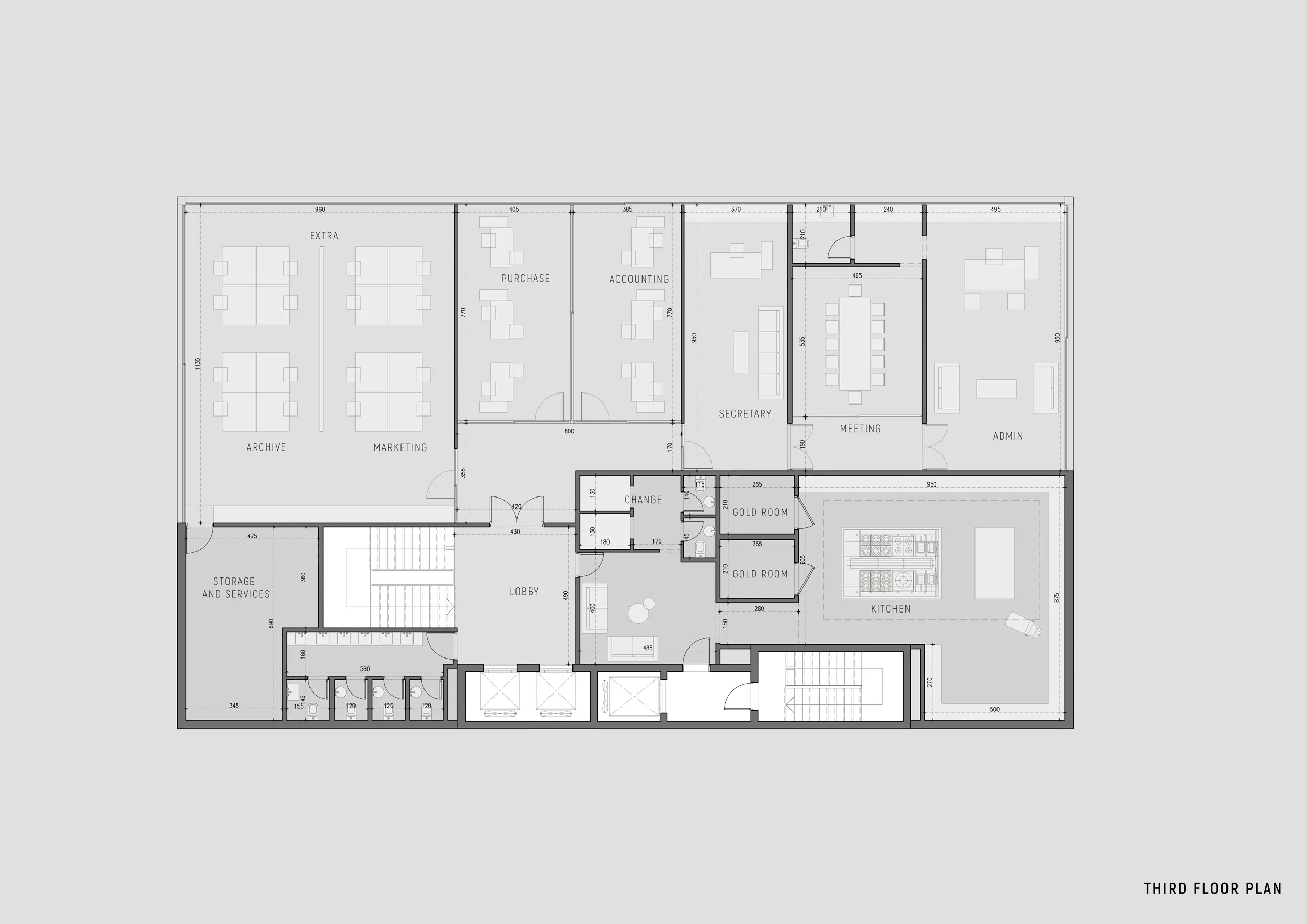
The Operational Brain (3rd Floor): The uppermost level consolidates the administrative functions, including executive offices, a conference room, and a specialized commercial kitchen designed to support the facility’s nutritional programs.
Materiality and Scenographic Lighting
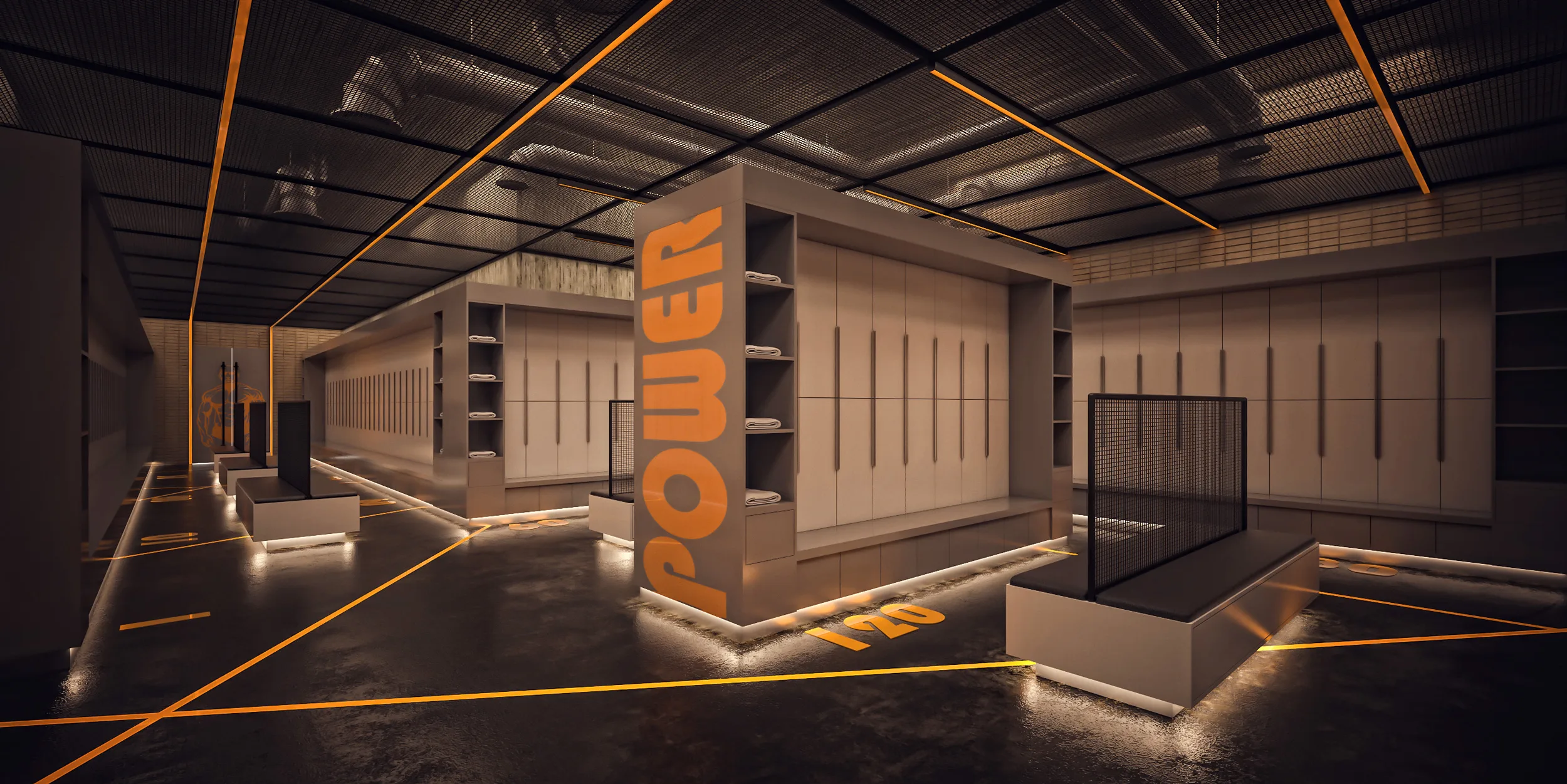
The interior language is characterized by a “Industrial Chic” palette—polished concrete floors, exposed matte-black ceilings, and stainless steel accents. A key architectural element is the Scenographic Lighting System; linear LED strips are used not only for illumination but as a wayfinding tool, tracing the geometry of the space and guiding the user’s eye. Large-scale environmental graphics, such as the bold “POWER” typography on structural columns, are integrated as architectural elements rather than mere decoration, reinforcing the brand’s identity and the building’s energetic purpose.
Technical Integration
From a technical standpoint, the facility integrates a high-efficiency HVAC system concealed within black mesh ceilings, ensuring optimal thermal comfort during peak training hours. Acoustic treatment is seamlessly embedded into the wall panels and flooring of the heavy-weight zones to mitigate vibration and noise transmission across the vertical structure.