PLICA: Origami Street Furniture Collection
A family of urban elements derived from the geometry of folding
Folding is the single idea behind this collection. By turning flat surfaces into articulated three-dimensional forms, one geometric operation shapes three objects for the public realm: a street lamp, a drinking fountain, and a bench.
Inspired by the logic of origami, the fold works as a design method, a structural strategy, and a way of organising function. Depth, rigidity, and visual richness come from the geometry itself, without superfluous gestures.
A shared material palette ties the family together: matte black powder-coated steel, board-marked concrete, and natural timber, with integrated planting in the bench linking the collection to its landscape.
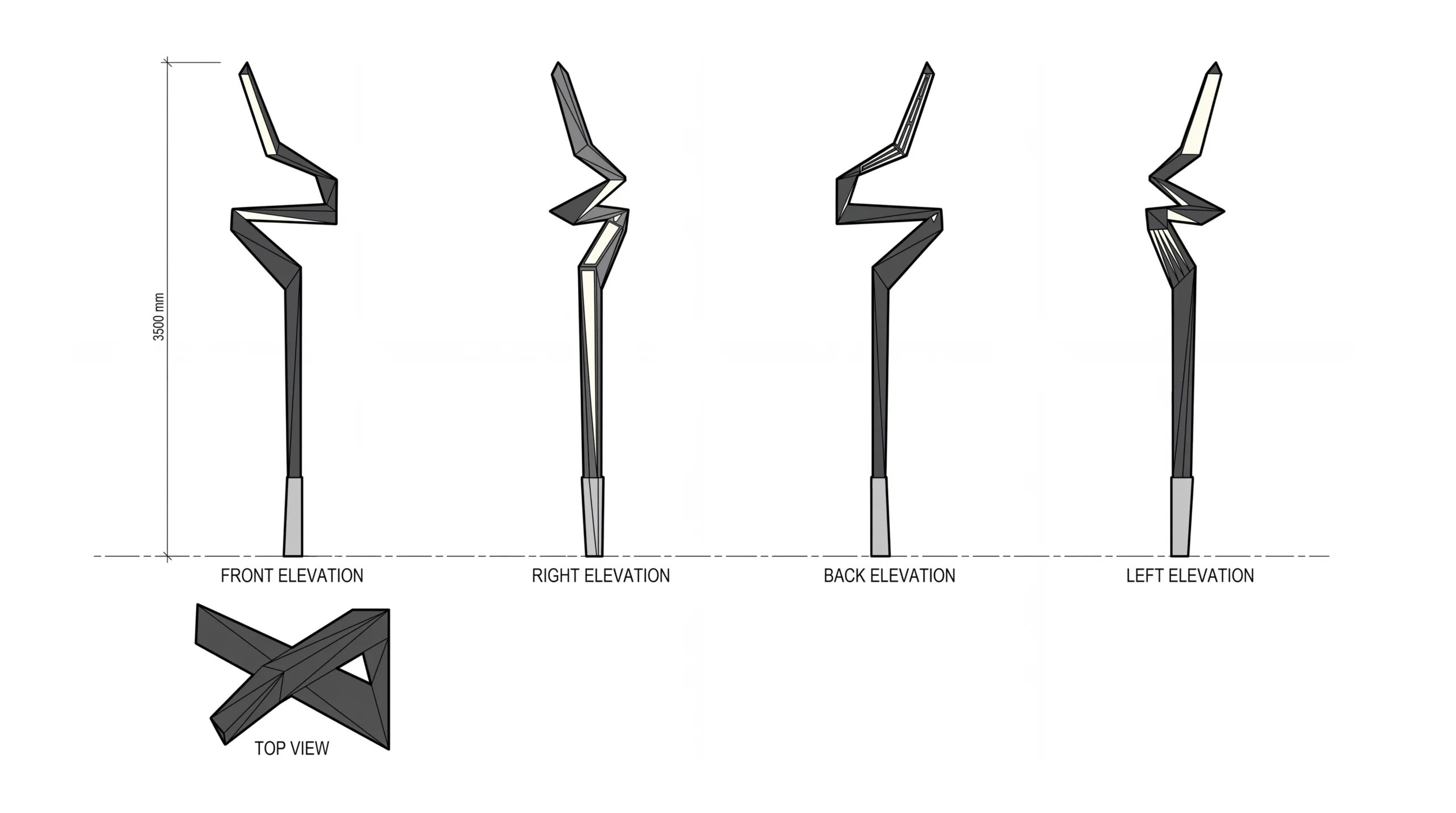
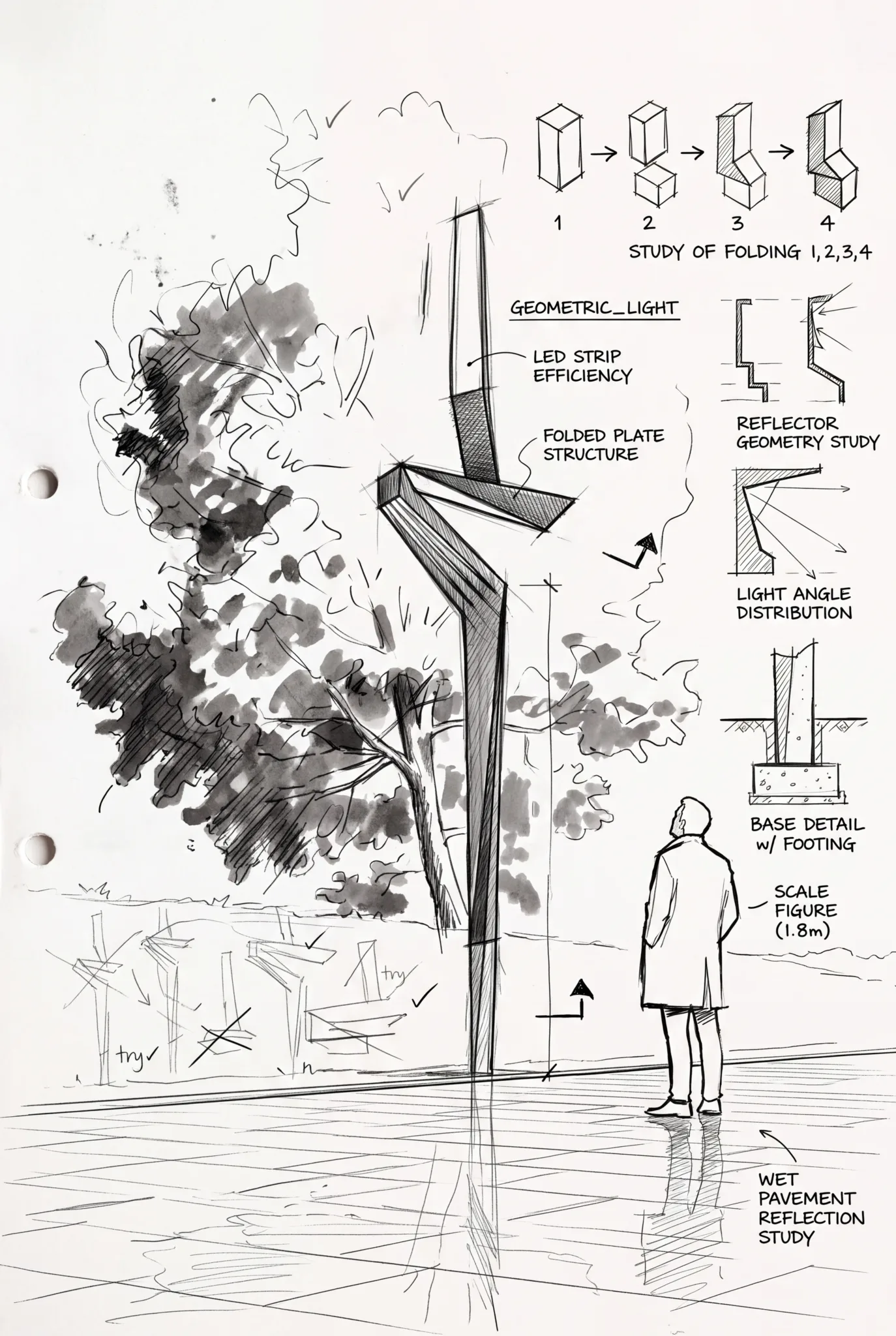
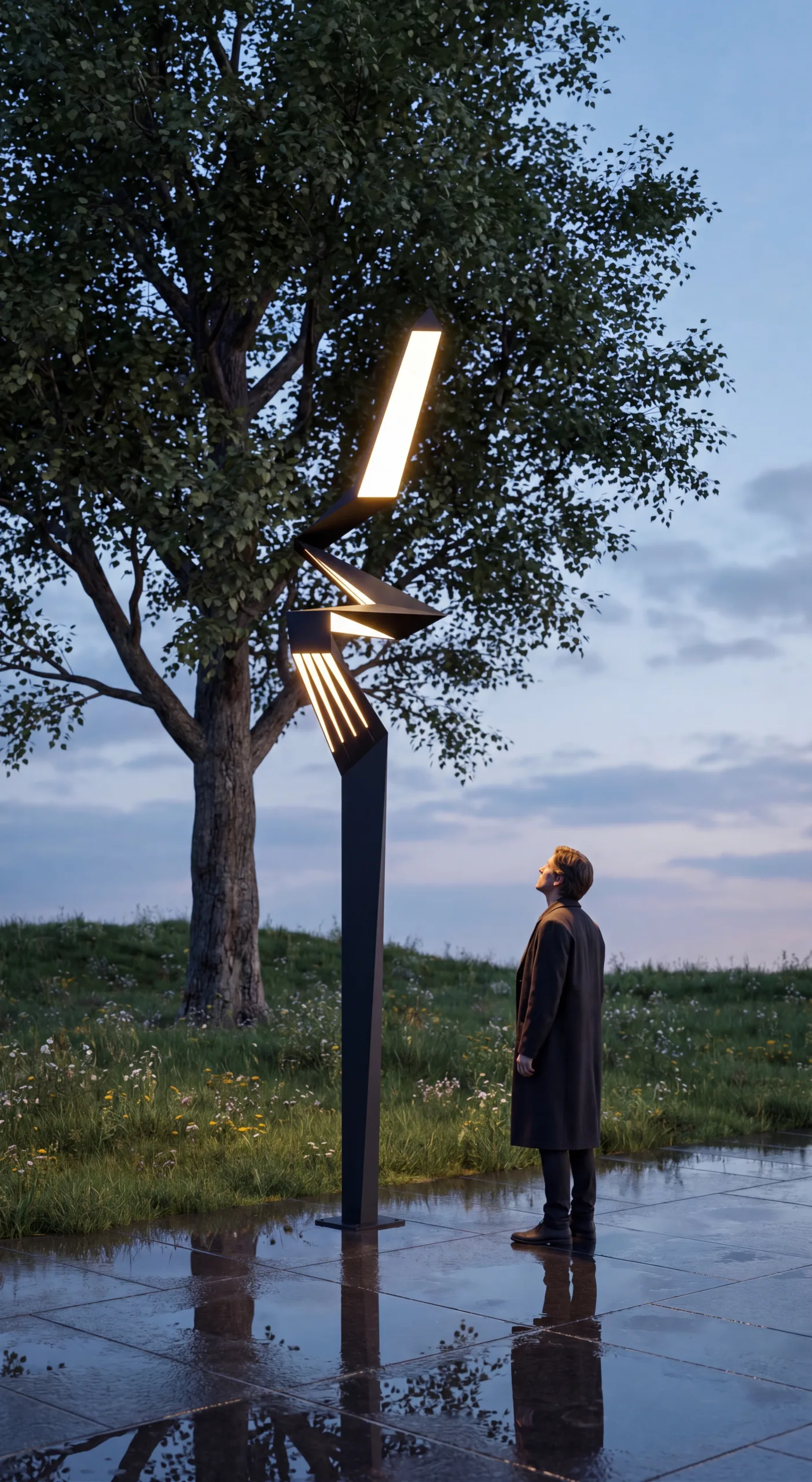
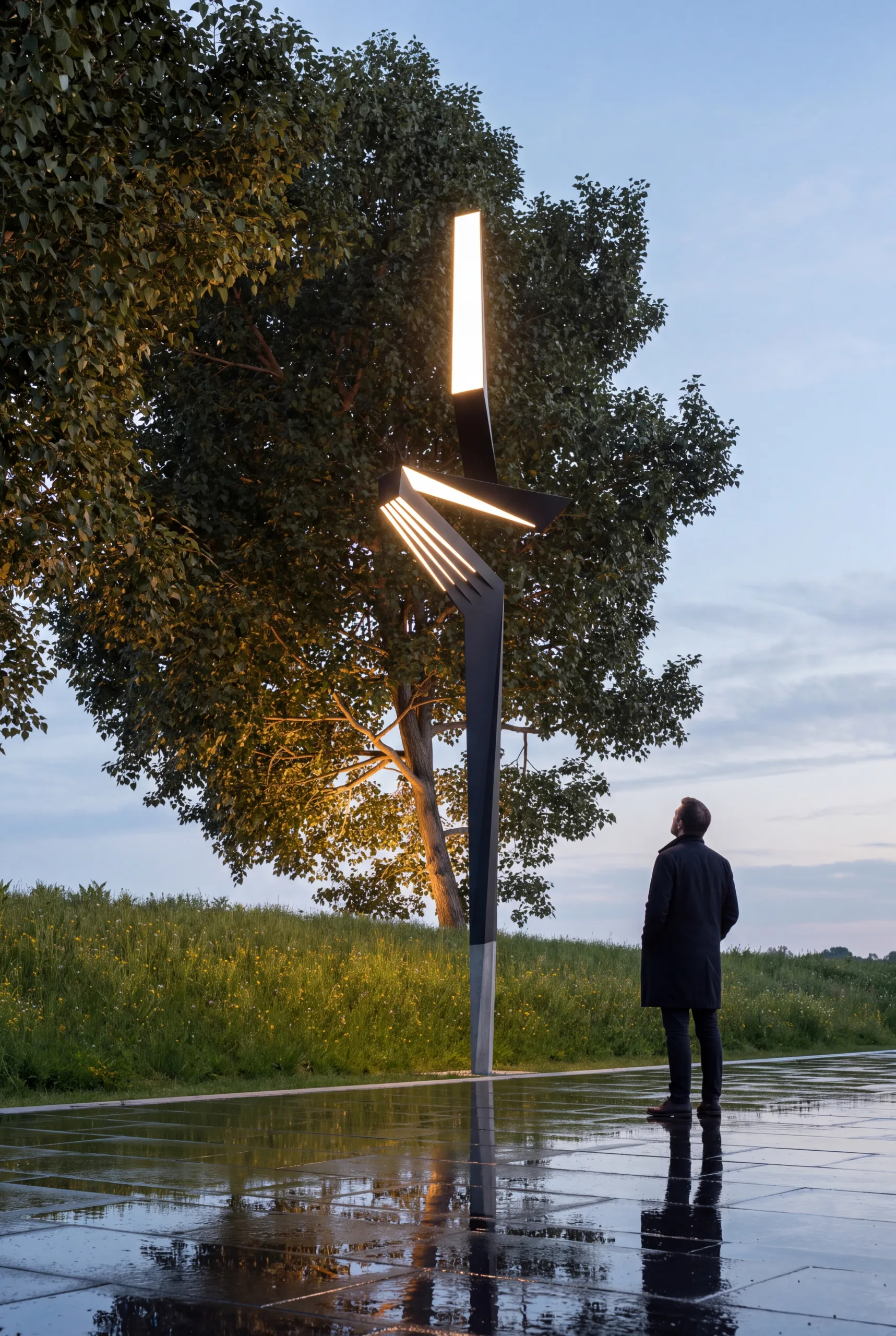
- The Origami Street Lamp
Height: 3.5 m
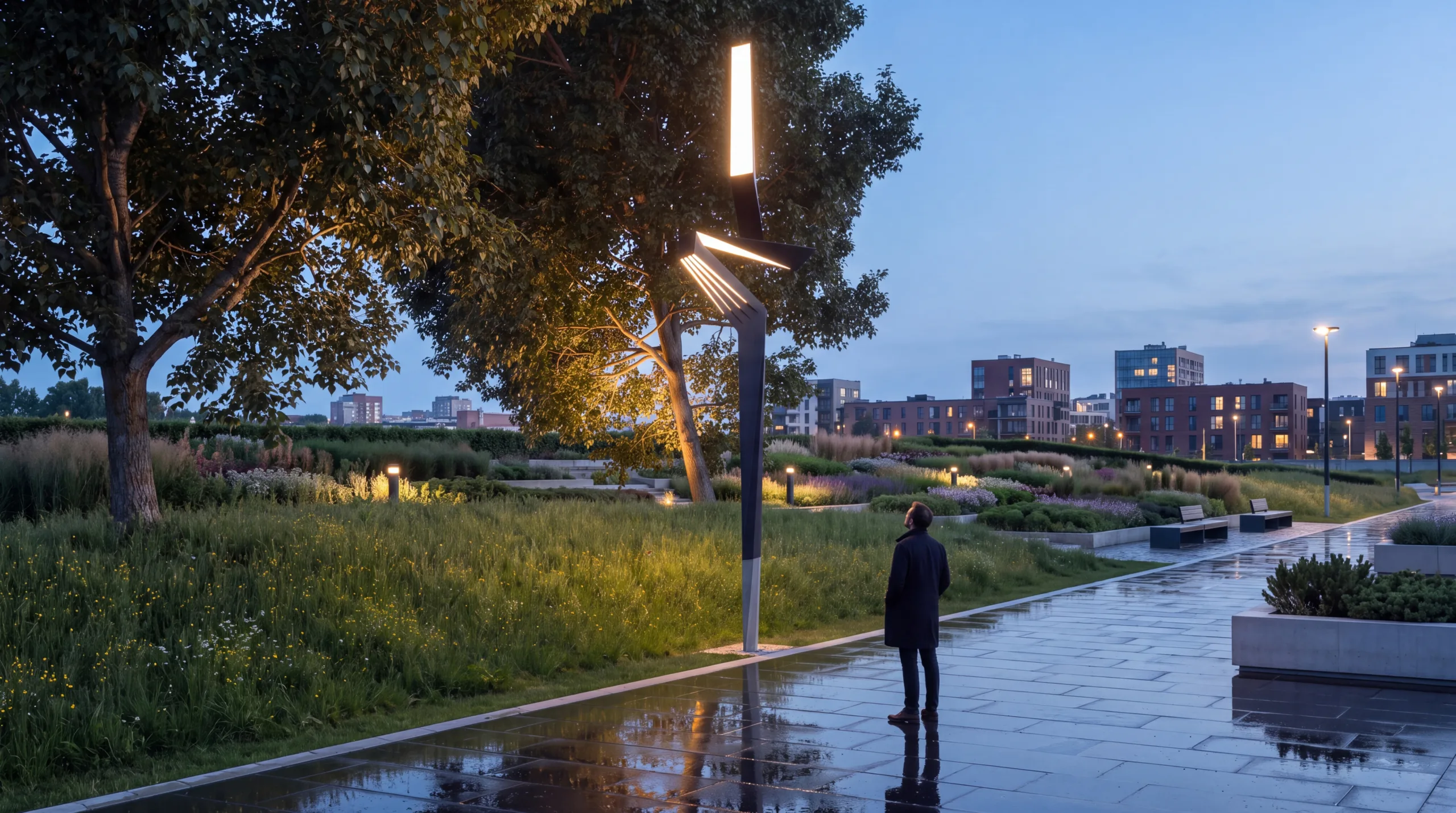
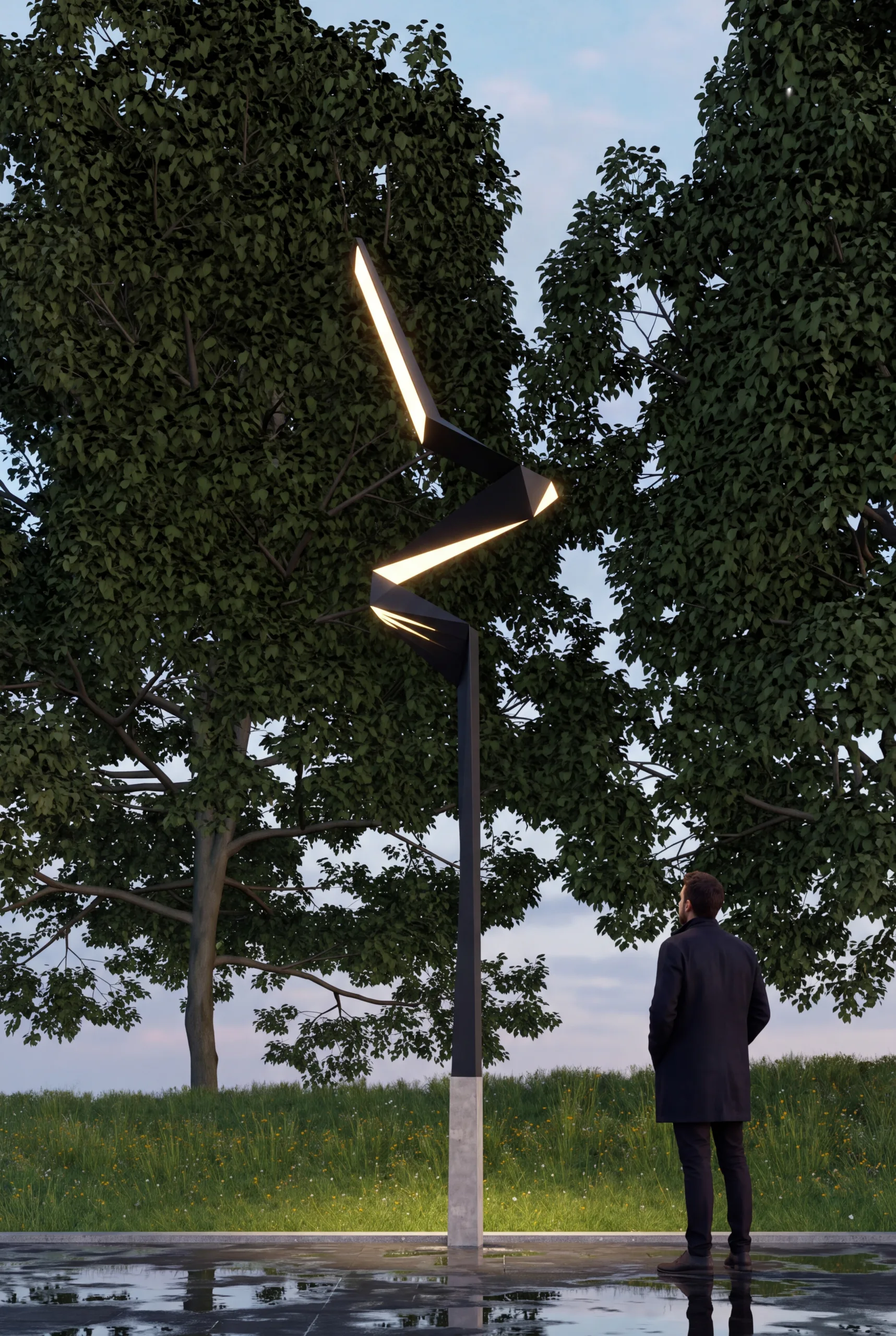
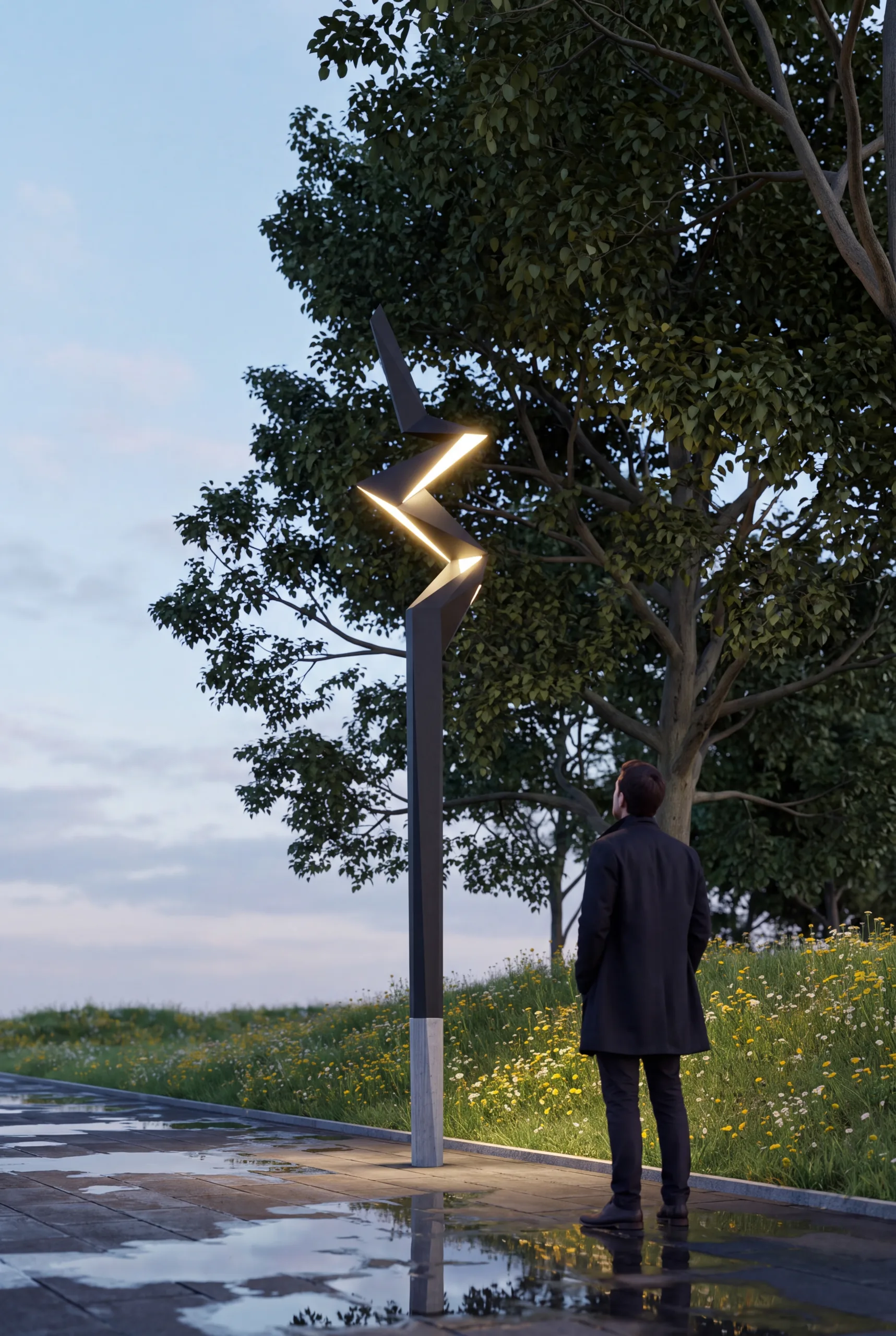
The lamp reimagines the lighting pole as an integrated architectural element, where structure, illumination, and form work together. A continuous metal profile rises vertically, then unfolds into angular, opposing planes. Its silhouette shifts as you move around it.
In cross-section, the intersecting planes form an approximate X, adding directional stiffness and creating distinct orientations for light.
Three layers of light
- Linear light along the main shaft gives a continuous visual reference at pedestrian level.
- Narrow openings at selected folds cast lateral light and draw out the geometry through light and shadow.
- Larger luminous surfaces at the top provide ambient light for the surrounding space and vegetation.
Each light source is built into the geometry rather than attached to it, so the folds act as both structure and housing. Distributing light across several levels allows independent dimming and more precise control, and limiting the direct visibility of the sources helps reduce glare and light spill. Actual energy savings and light-pollution reductions depend on photometric design and site-specific testing.
A folded section can be stiffer than an equivalent flat plate, potentially reducing the material needed. The hollow interior carries cables and equipment, keeping the exterior clean.
Materials
A matte black powder-coated finish sharpens the edges and lets the illuminated openings take centre stage after dark. LED strips sit in aluminium profiles behind translucent diffusers for an even glow, and a pale concrete or metal base eases the transition from ground to dark steel.


- The Origami Drinking Fountain
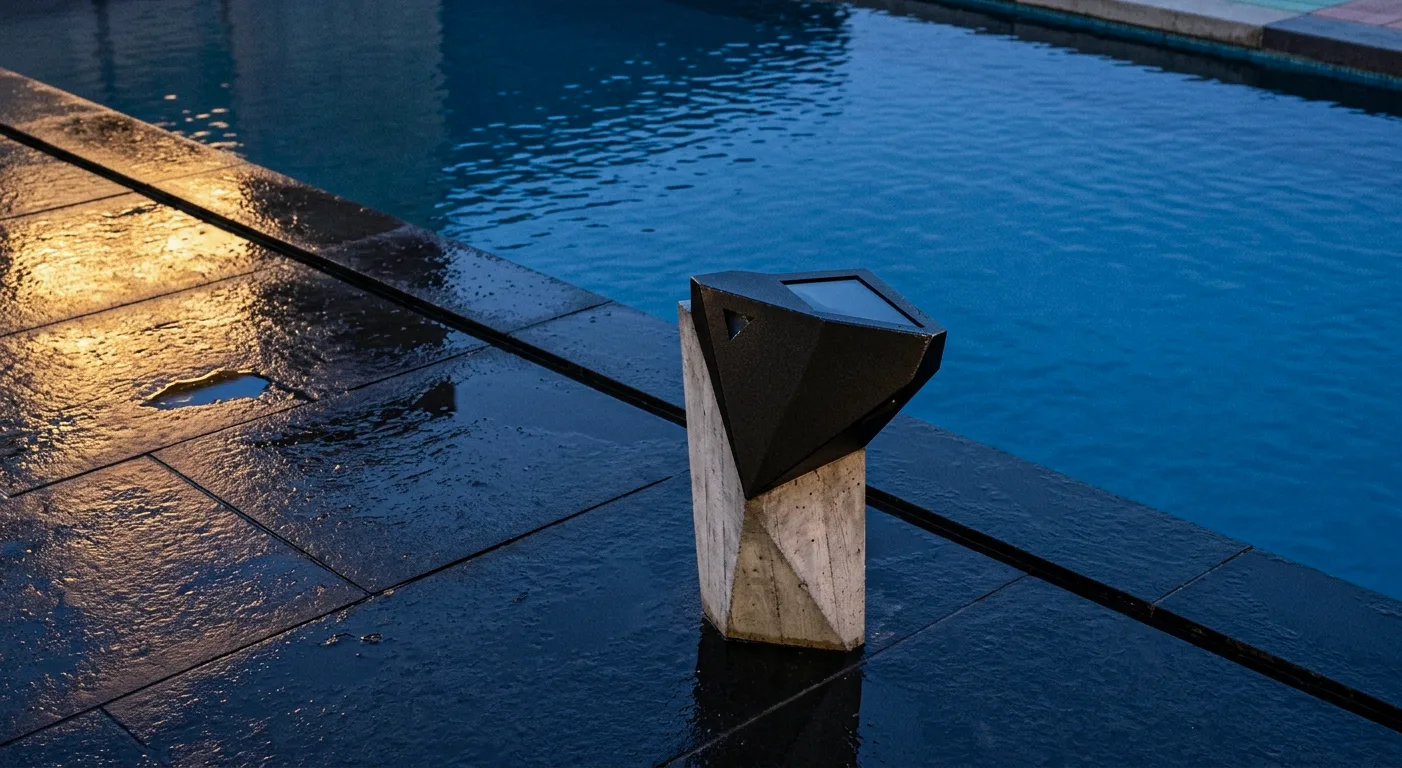
The fountain brings the collection’s language down to the scale of the body and the simple act of drinking. Two contrasting masses meet here: a concrete base cut into inclined planes, and a folded black steel head.
The base reads as a compact mineral volume, like a cut crystal, with a tactile board-marked surface. Above it, the steel head looks like a sheet of metal caught mid-bend. The inclined surfaces guide the eye to the water outlet, while the folds conceal plumbing and drainage.
Designed for everyone
- Outlet height, projection, controls, and clearances are coordinated for different users, including children and people with reduced mobility.
- Drainage is arranged to prevent standing water and minimise splashing.
- Surfaces are detailed to withstand repeated contact, weathering, and maintenance.
The dark steel appears to emerge from the lighter concrete, with concealed fixings keeping the junction simple and durable.
- The Origami Bench
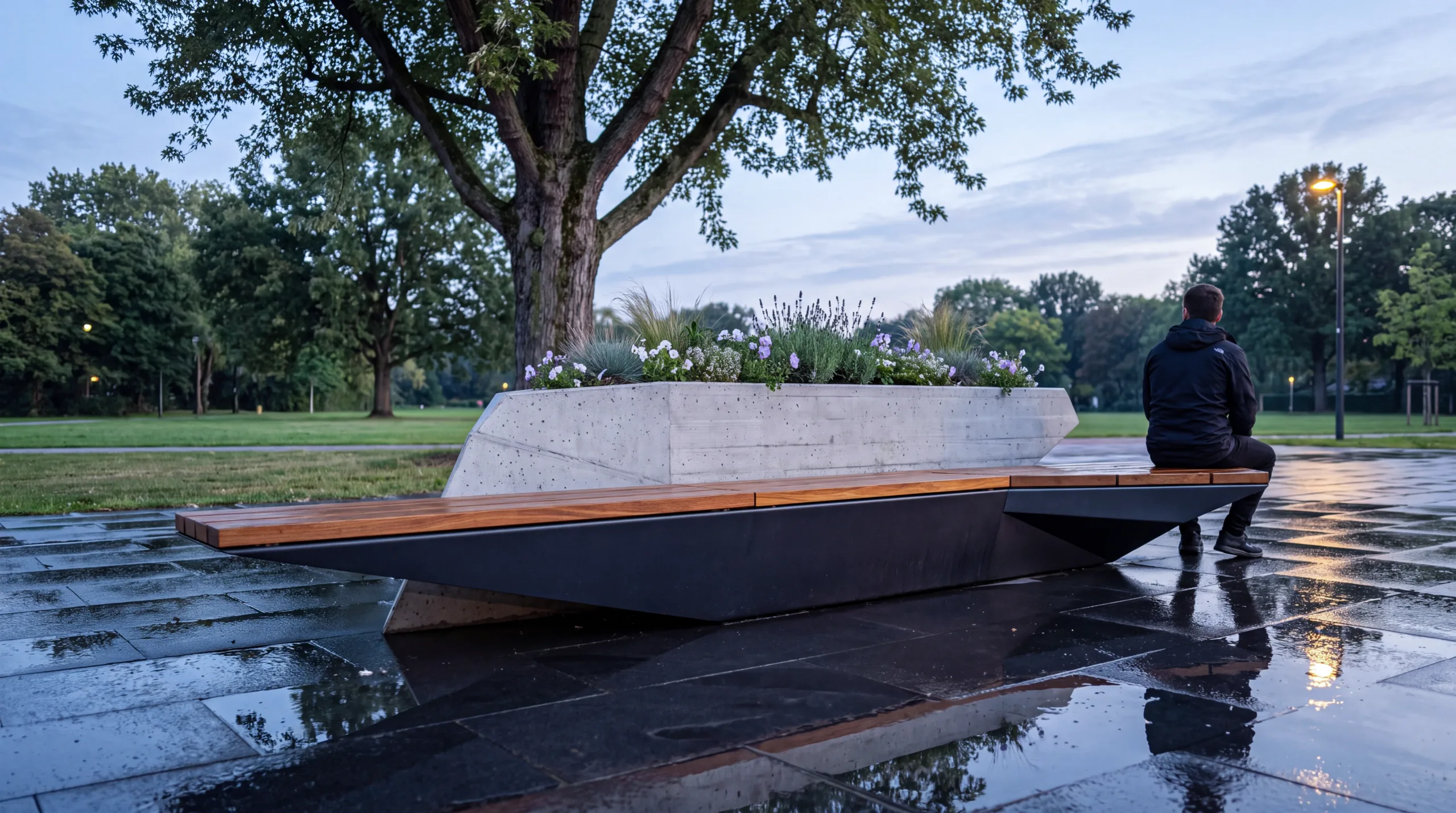
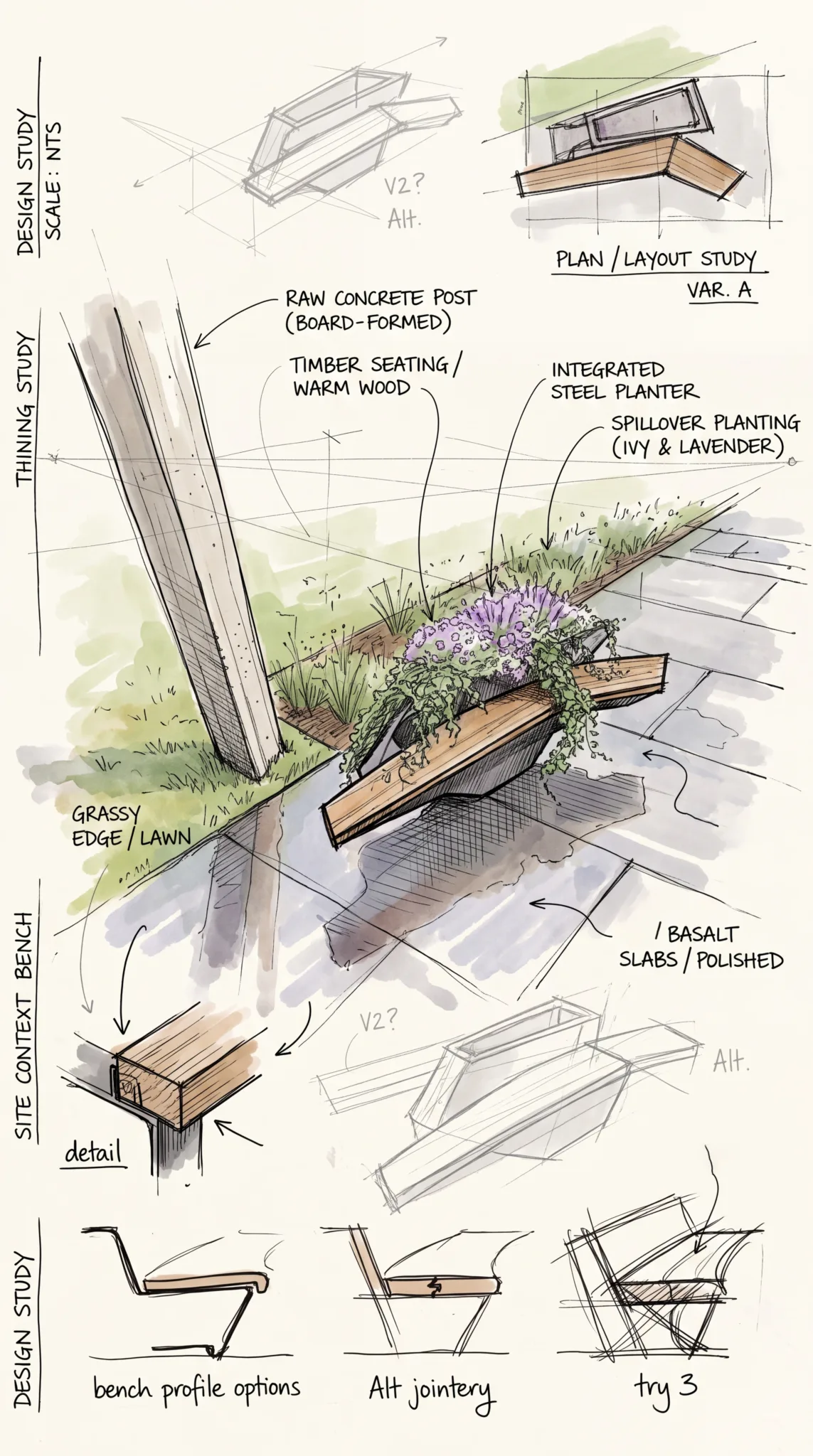
Where the lamp is vertical and the fountain is a point of contact, the bench extends the folding principle along the horizontal, creating a place for rest, conversation, and a closer relationship with the landscape.
Folded black steel forms the structure and its angular profile. Natural timber warms the seating surface, balancing the precision of the metal with the comfort of the grain. Integrated planting adds a living layer: it softens the steel, brings seasonal change, and helps define pedestrian areas.
Placed along routes, in gardens, or around squares, the bench works alone or as part of a larger composition, supporting both individual use and informal encounters.
Built to last
The steel frame is designed for structural loads, the timber for proper fixing, ventilation, and moisture protection, and the planting for soil containment, drainage, irrigation, and maintenance access.
A Unified Language for the Public Realm
Lighting, drinking, and seating are treated here as complementary parts of one public environment, not isolated product categories.
Folding provides the common thread across different heights, proportions, and functions. It organises surfaces, hides technical systems, defines structure, and shapes each object’s relationship with its user.
Matte black steel brings precision, exposed concrete brings mass and texture, and timber and planting bring the sensory qualities of landscape. Together they balance geometric abstraction with everyday use.
Origami becomes a design methodology that gives individual objects a shared identity and makes them part of the architectural composition of the city.