Here is a rewritten and refined version of the text without mentioning Schema Seven or any architectural firm, while preserving the meaning and academic tone:
Lebanese architecture is defined by three fundamental components: the plan, the materials, and the decorative elements. The plan is characterized by its simplicity, centering around a central hall that serves all rooms and eliminates the need for corridors. This central space becomes the heart of the house, from which all daily activities unfold. Orientation is typically toward the south-west, allowing exposure to prevailing winds and maximizing natural ventilation.
Stone is the primary material used in traditional Lebanese houses, applied with remarkable craftsmanship rooted in ancestral know-how. Its treatment is both refined and efficient, demonstrating a deep understanding of material use. Since the late 19th century, red roof tiles imported from Marseille have become a defining element of Lebanese residential architecture.
The Lebanese house represents a deeply rooted architectural typology shaped by long periods of cultural interaction. It embodies what architect Le Corbusier described as a “housing machine,” blending practicality with heritage. This architectural identity evolved during the Ottoman era and continued through the French Mandate, reflecting a balance between function and tradition.
Over time, the Lebanese house adapted to globalization, integrating internal and external influences from both Eastern and Western architectural styles. Despite these influences, it retained its core identity and responsiveness to climate and landscape.
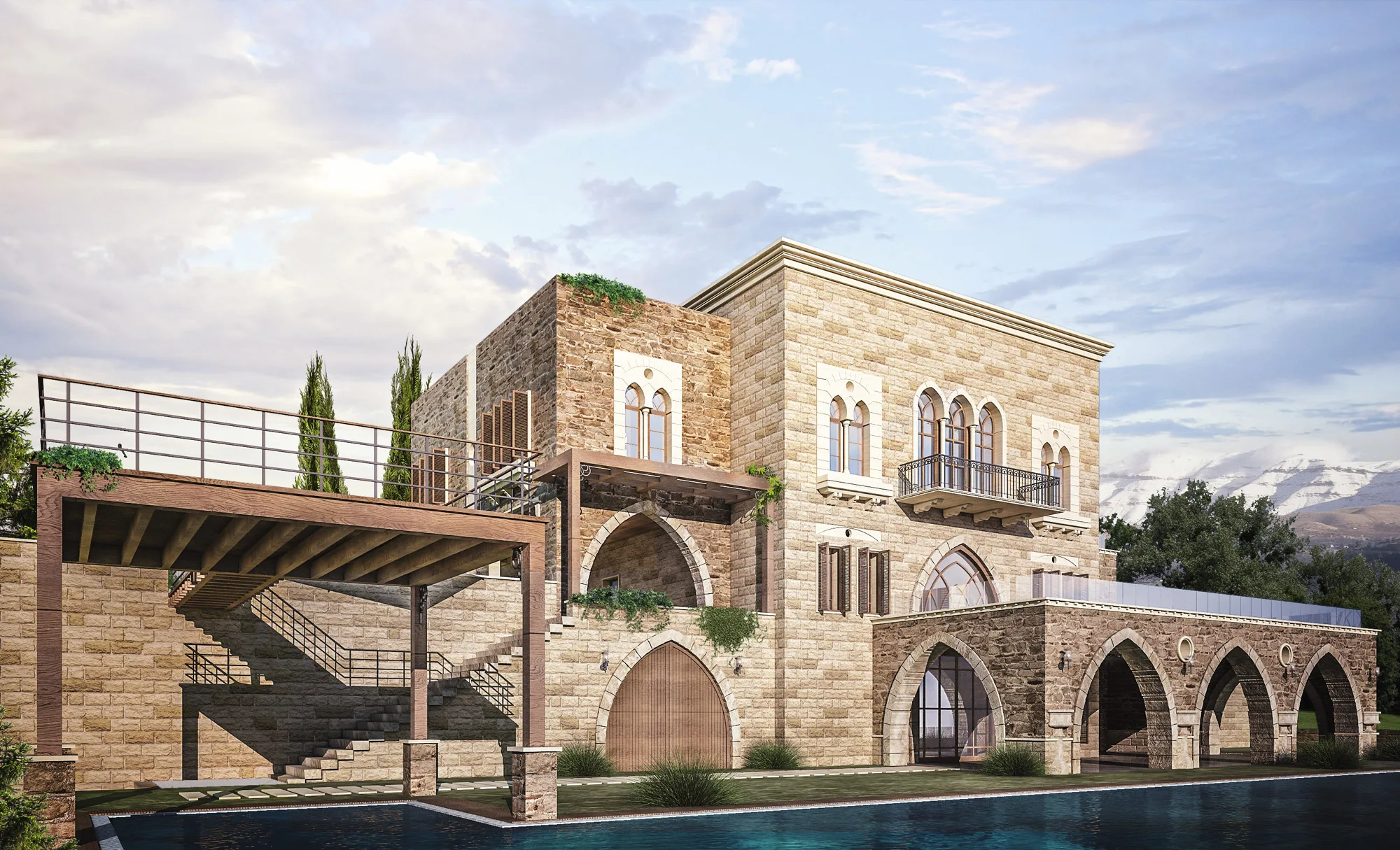
This residence draws inspiration from traditional Lebanese homes, aiming to integrate harmoniously with both the urban fabric and natural surroundings of Ras el Matn, a town known for its stone houses, red-tiled roofs, and pine-covered hills.
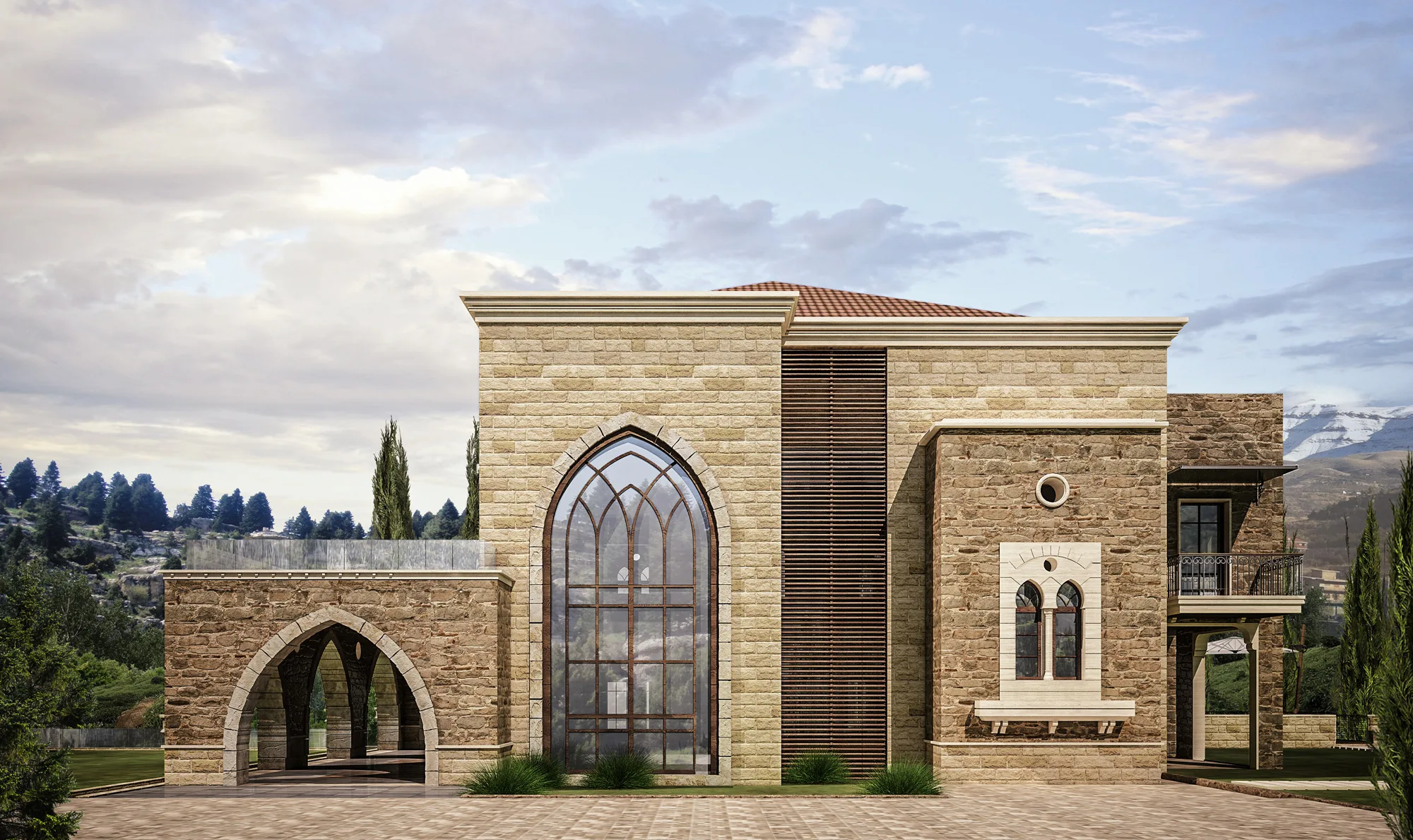
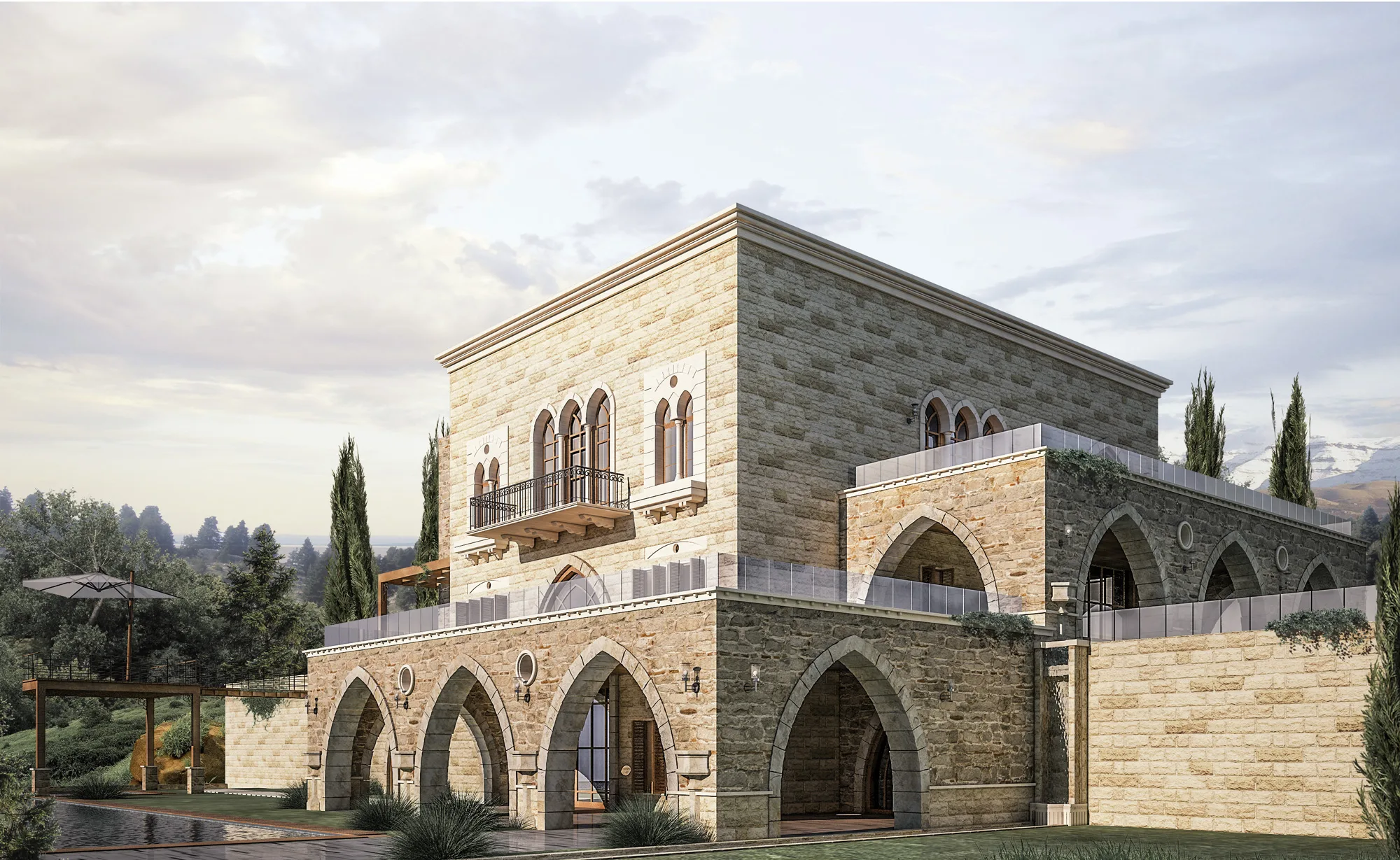
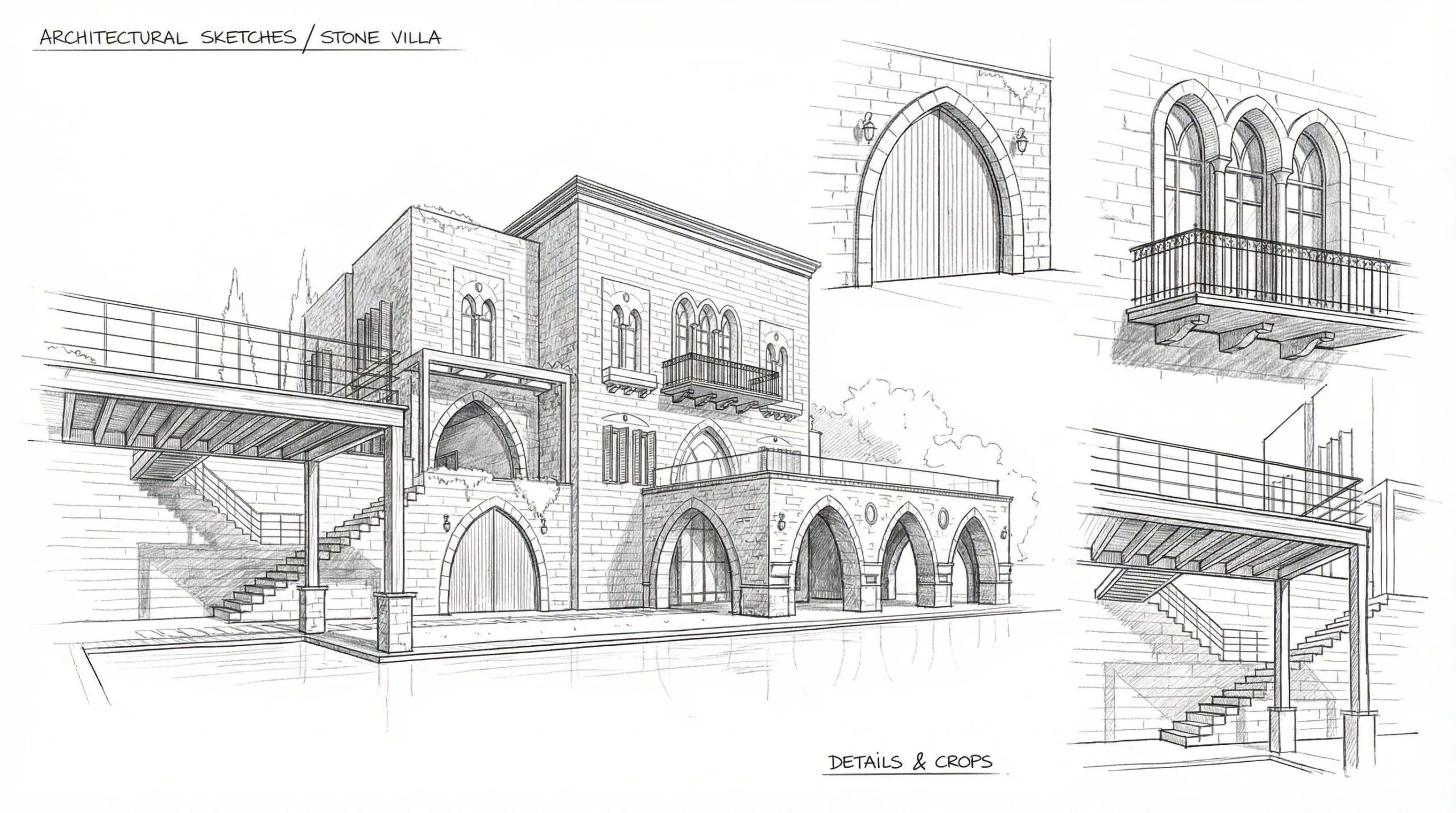
The house follows the traditional composition of a main squared block topped with red tiles, connected to smaller secondary volumes that create terraces for family use. These terraces recall the traditional “mastaba,” an outdoor living space often shaded by pergolas and used for evening gatherings during summer months.
Lebanese houses are intrinsically linked to light and nature. The relationship between architecture and the environment is central to their design. Lebanon’s moderate climate has historically allowed outdoor living for much of the year, giving rise to an architecture that opens toward the landscape, captures summer breezes, and benefits from winter sunlight. This openness is achieved through various architectural strategies.
NH House was designed as a summer residence for a non-Lebanese family seeking to live among Lebanon’s green hills. The family selected the Ras el Matn area for its natural beauty and cultural character.
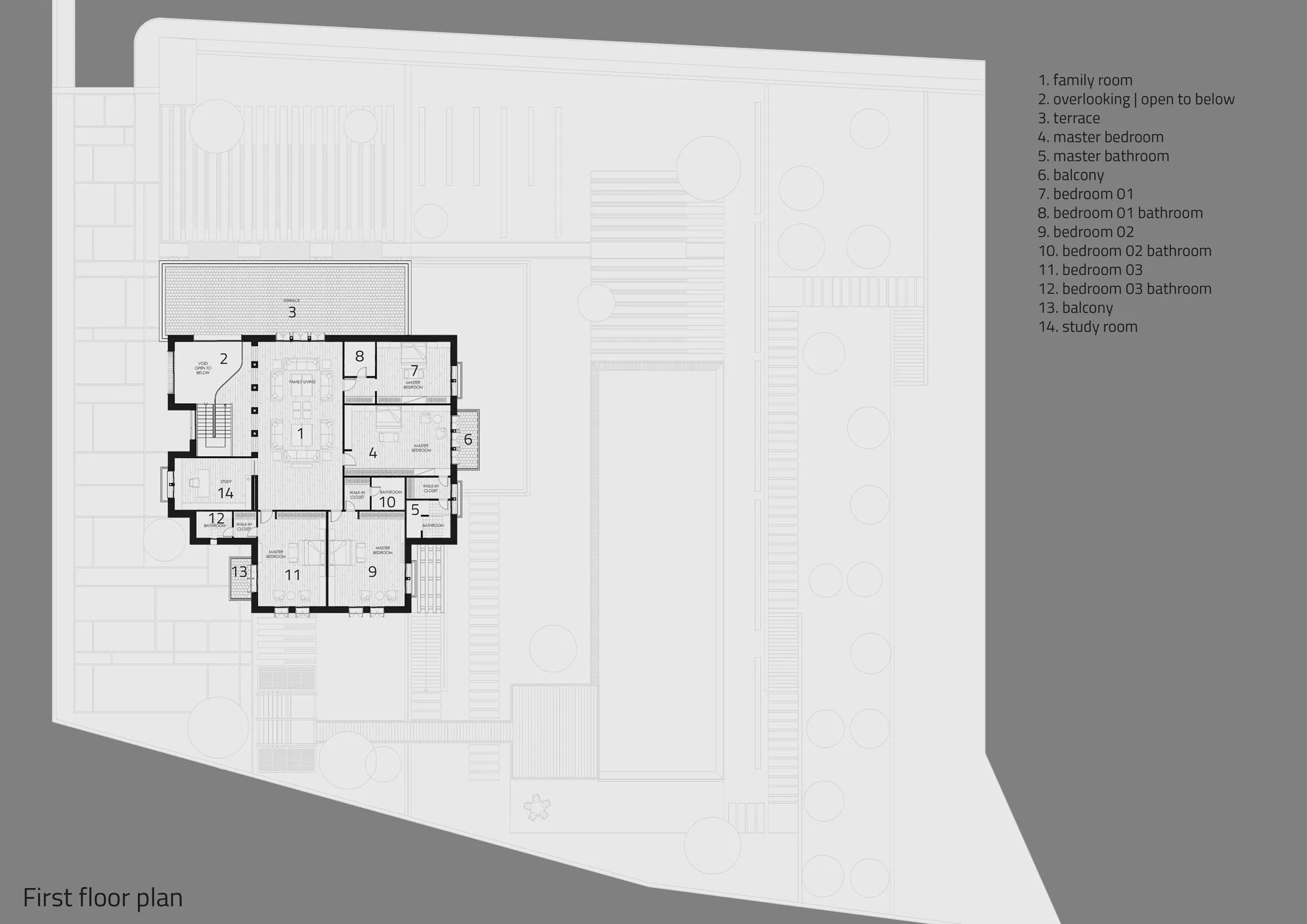
The house has a total built-up area of approximately 1,000 square meters distributed over three levels: a first basement floor, a ground floor, and a first floor.
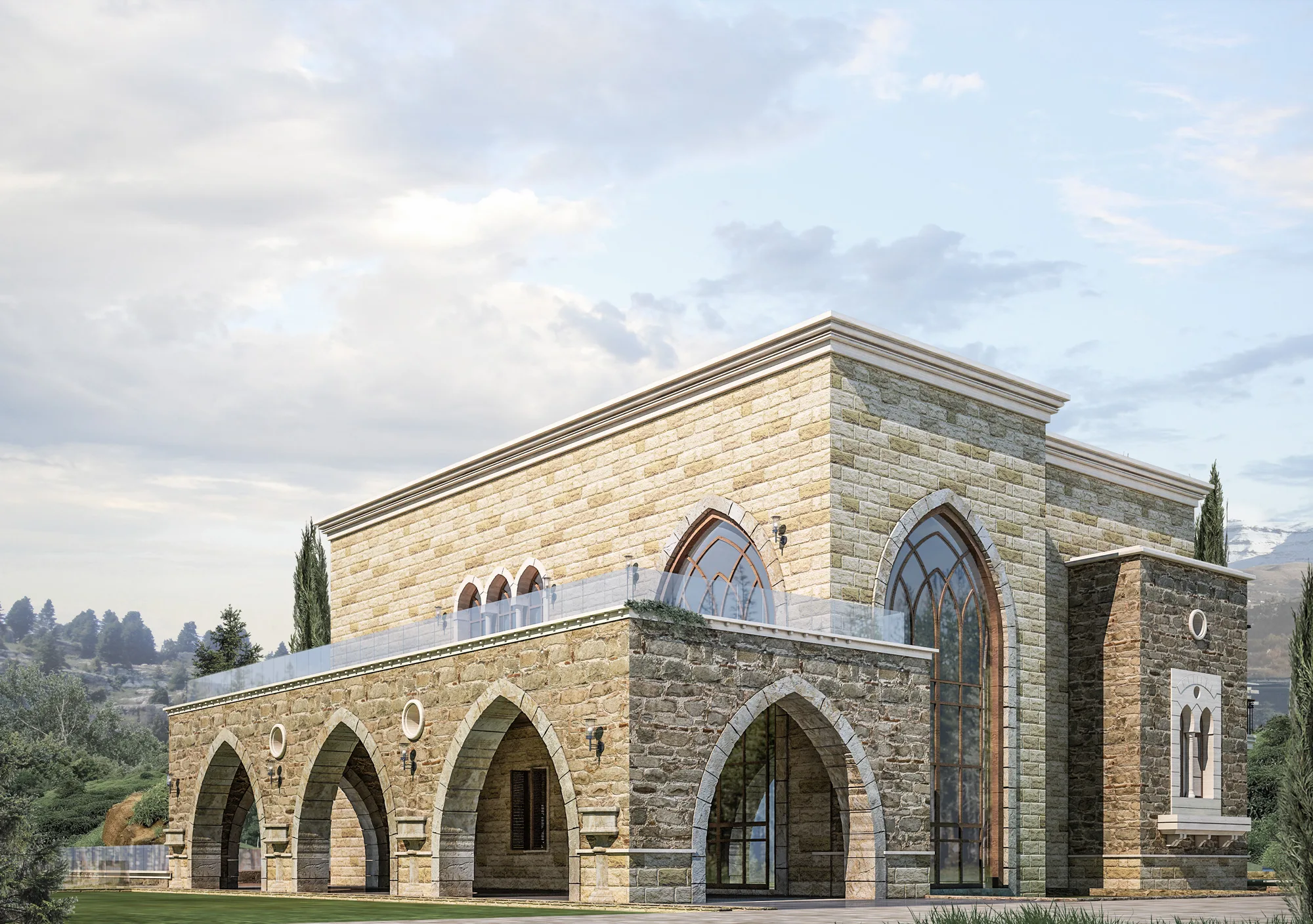
The main entrance is located on the ground floor and opens directly onto the garden. It is emphasized by a triple-arched structure leading to the reception and dining areas. A small kitchen connects the reception space to the first basement floor, creating visual continuity between levels and framing views of the garden and water features.
The first floor includes a spacious family living room that opens onto a large terrace and is surrounded by four main bedrooms, each with a private bathroom and dressing room.
The first basement floor accommodates the main living areas, including the primary kitchen, food storage spaces, staff quarters, a children’s playroom, and a home cinema, along with other essential service areas.
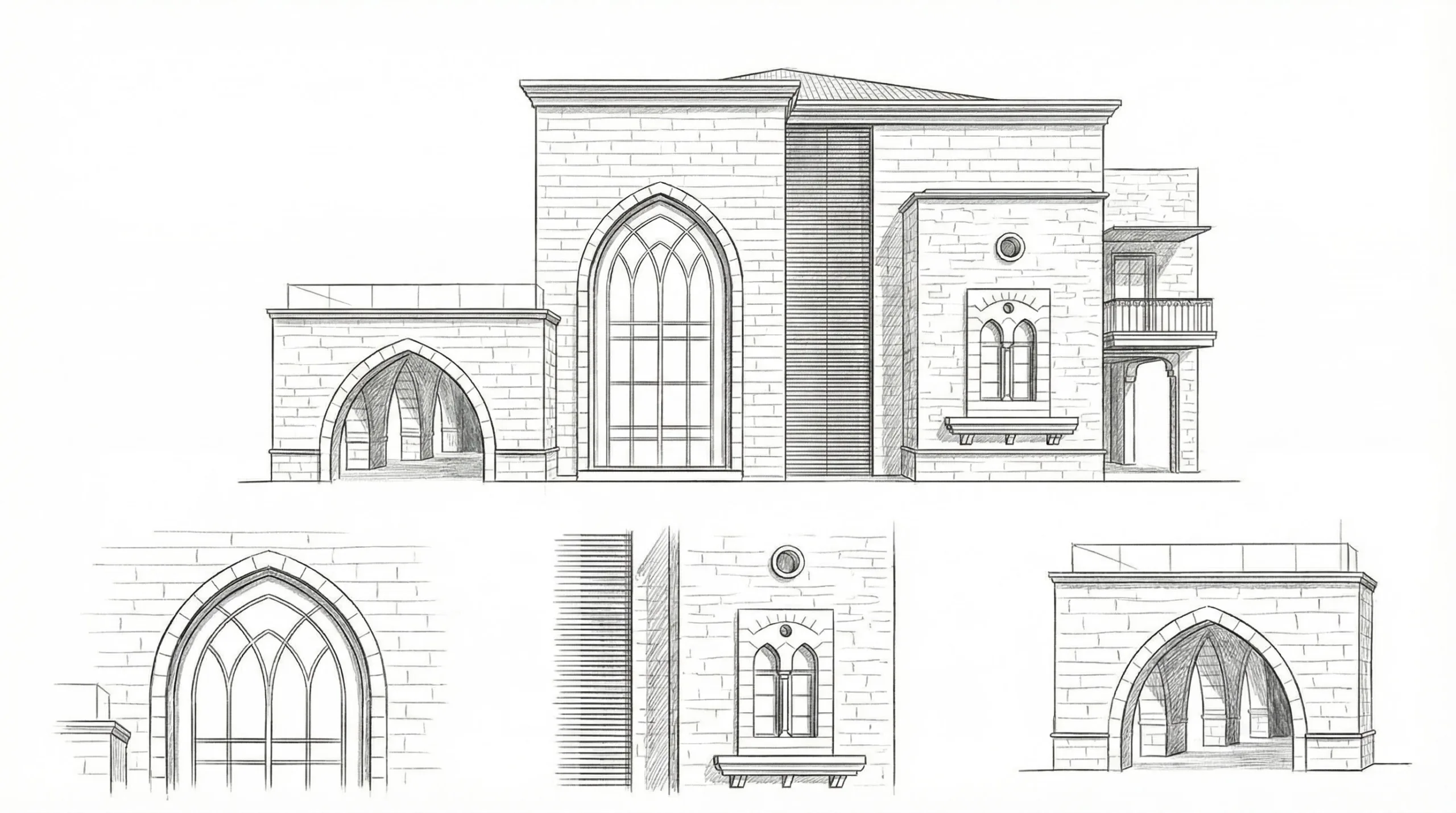
The exterior façades reflect the spirit of traditional Lebanese architecture while incorporating subtle modern and neo-classical elements. Two types of natural stone are used extensively, closely resembling historic façades in color, texture, and proportion.
Throughout the design process, particular emphasis was placed on strengthening the connection between interior spaces and the surrounding natural environment. Modern construction techniques made it possible to reinterpret traditional large arches using transparent glass façades, enhancing openness while preserving the architectural identity of the Lebanese house.