Al Amili Shrine
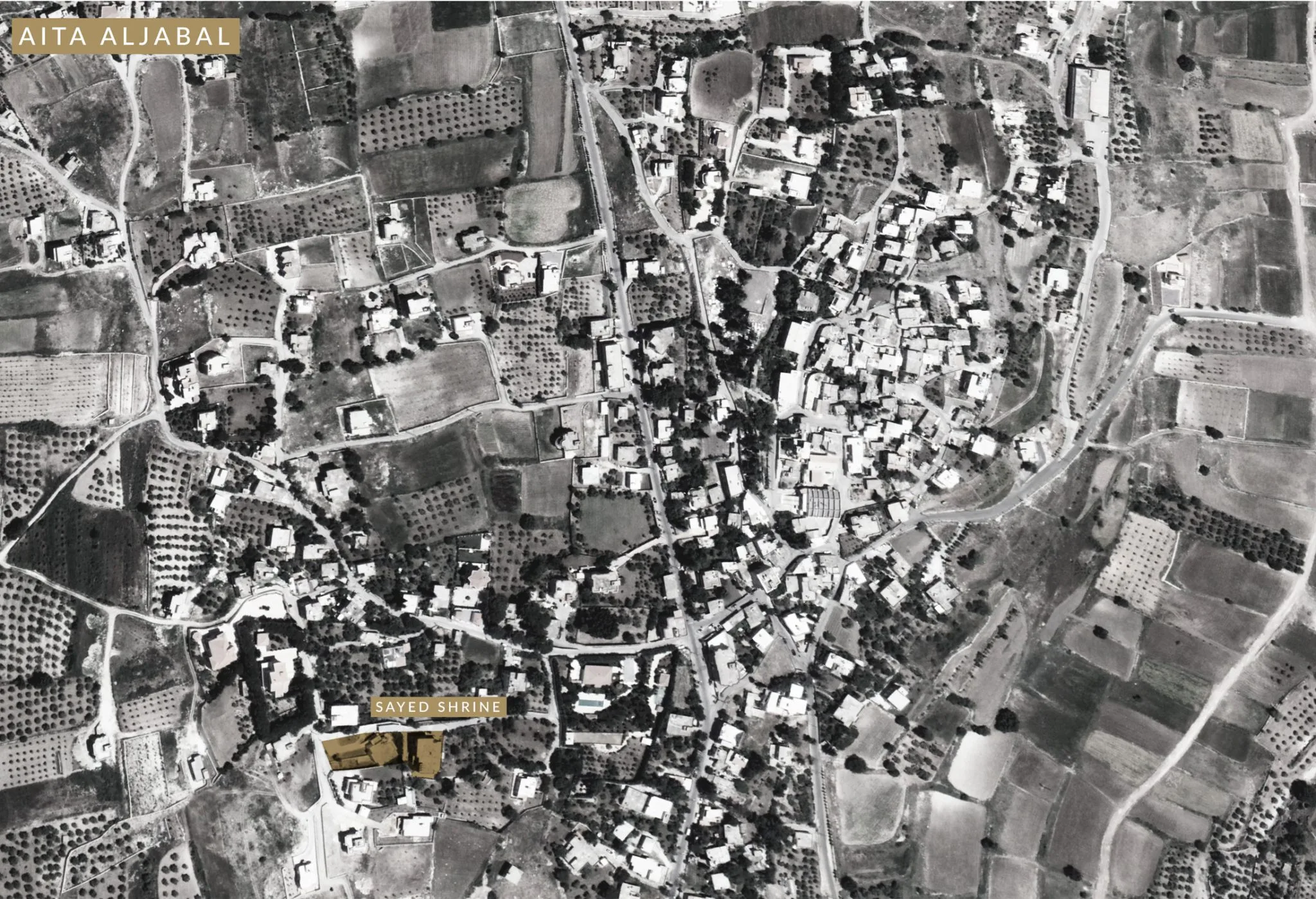
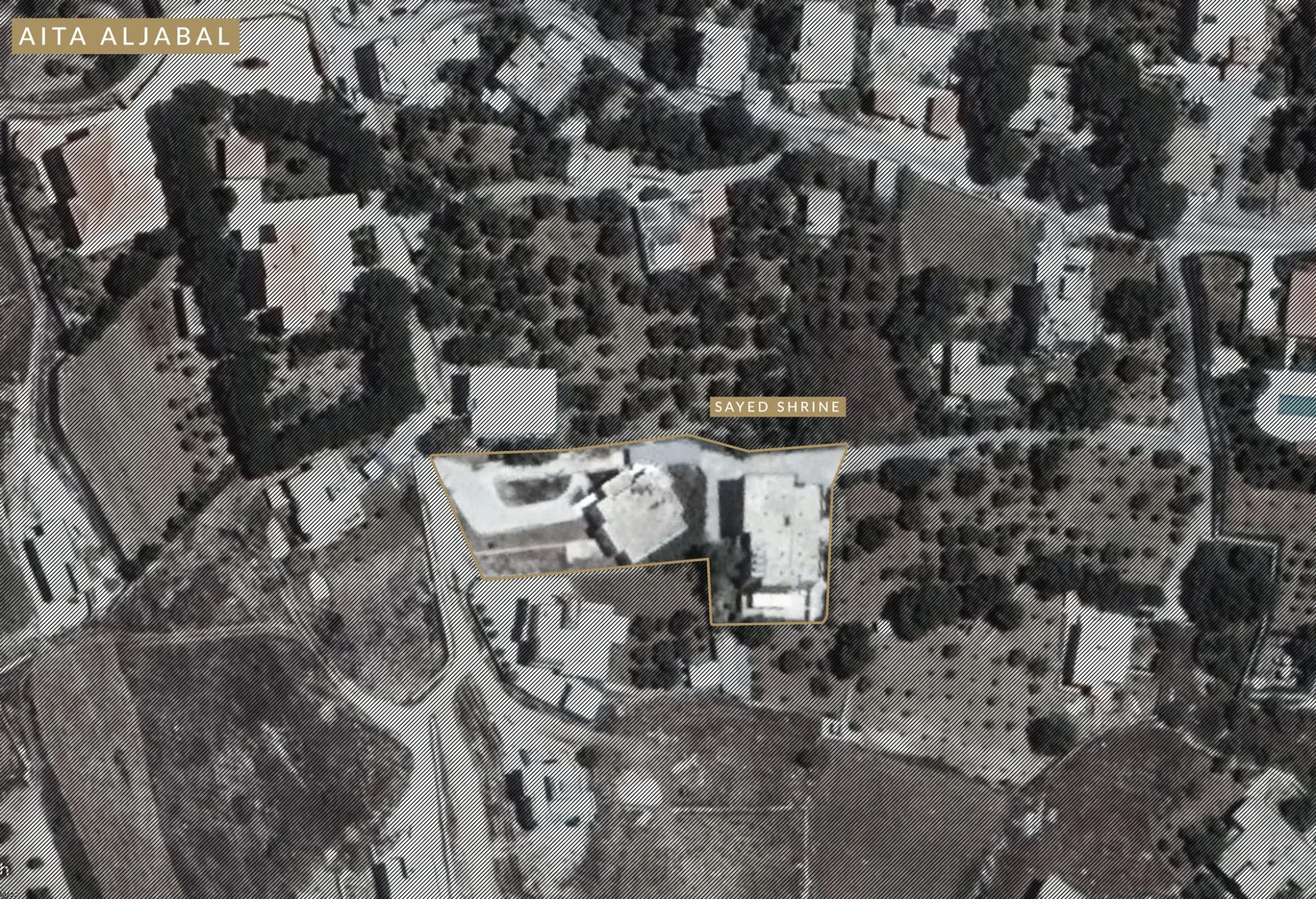
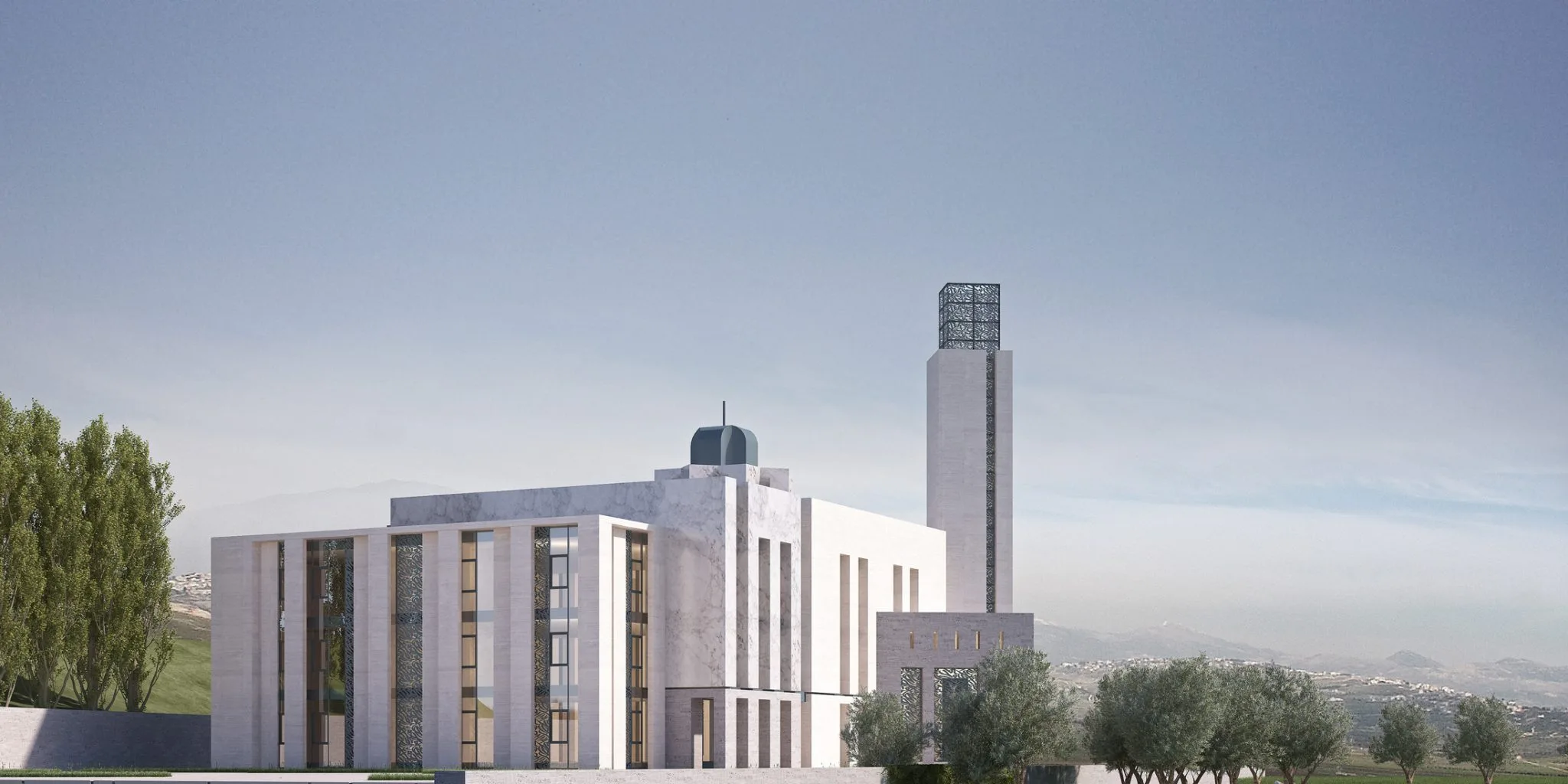
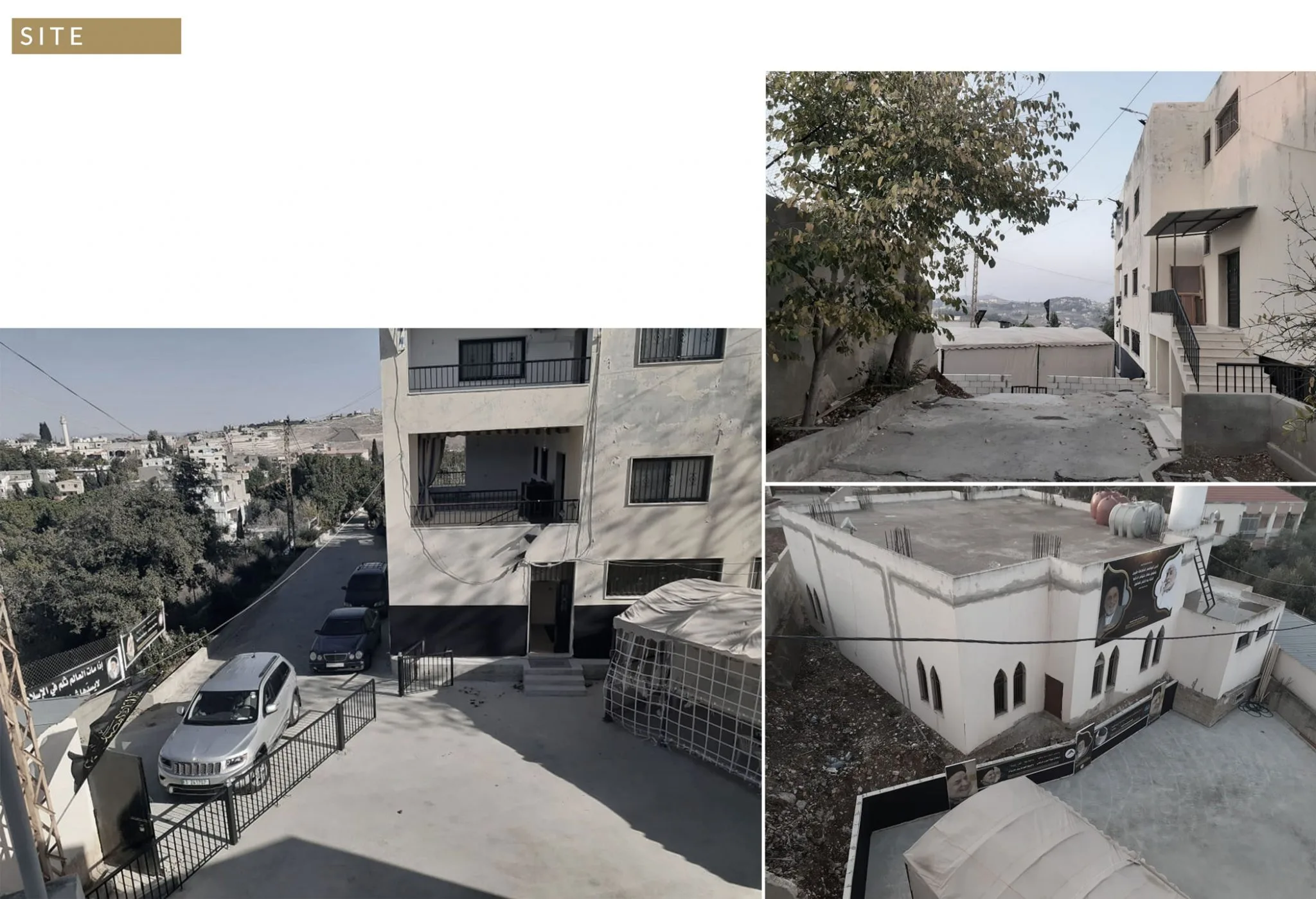
Located in the mountain village of Aita al-Jabal, in southern Lebanon’s Bint Jbeil district, the Al Amili Shrine is a religious and cultural project rooted in its rural and spiritual context. The site lies adjacent to the village mosque and near the private library of the late Islamic historian Sayyid Jaafar Murtada, who was buried on the premises. The project consolidates the grave, the library, and the mosque into a single architectural composition that responds to both scholarly and devotional functions.
Concept
The architectural approach is informed by the intellectual legacy and ascetic character of Sayyid Jaafar Murtada. Rejecting ornamental excess, the project reinterprets principles of traditional Islamic architecture through a restrained contemporary language, emphasizing clarity, simplicity, and permanence.
Spatial Organization
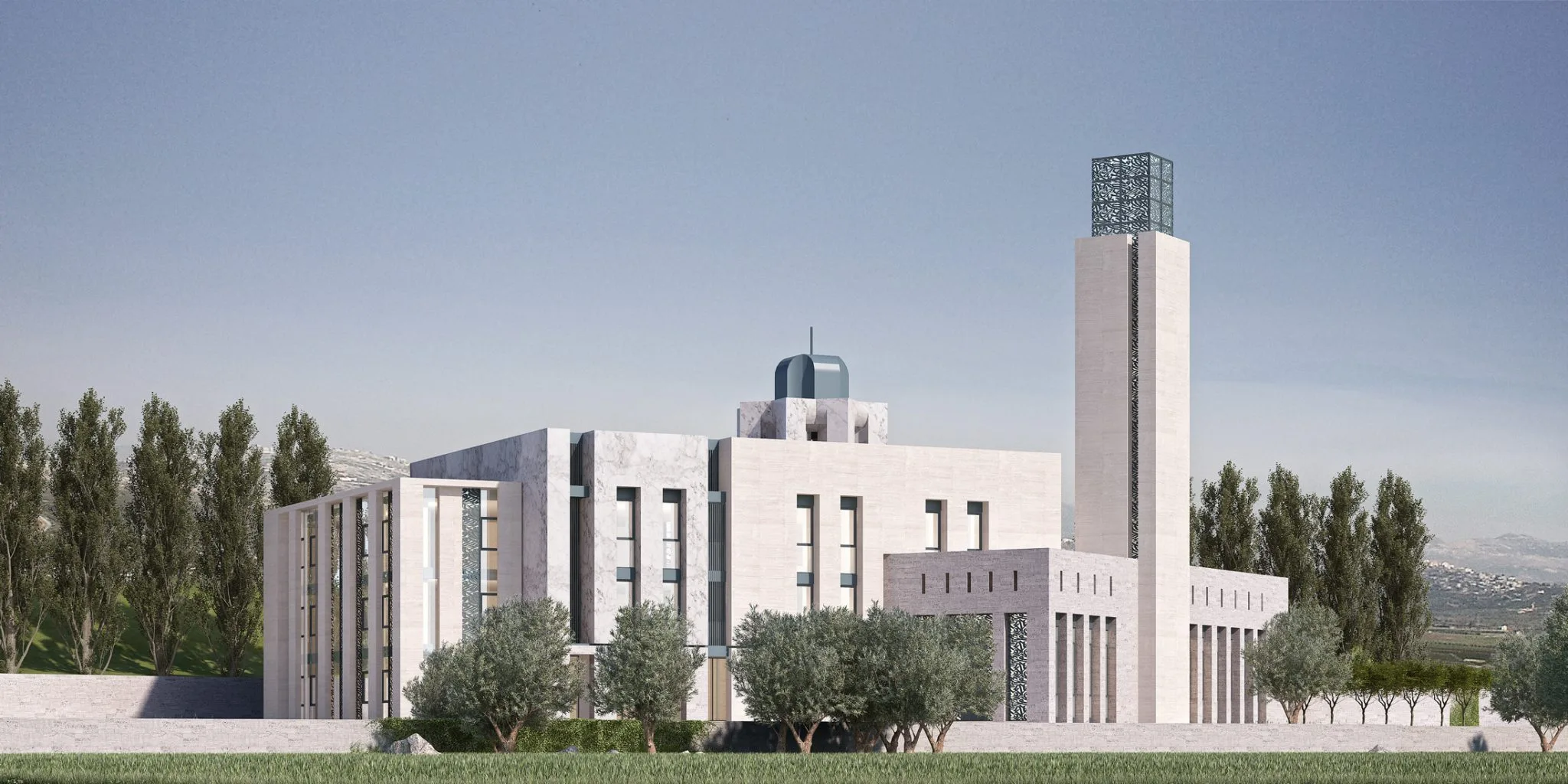
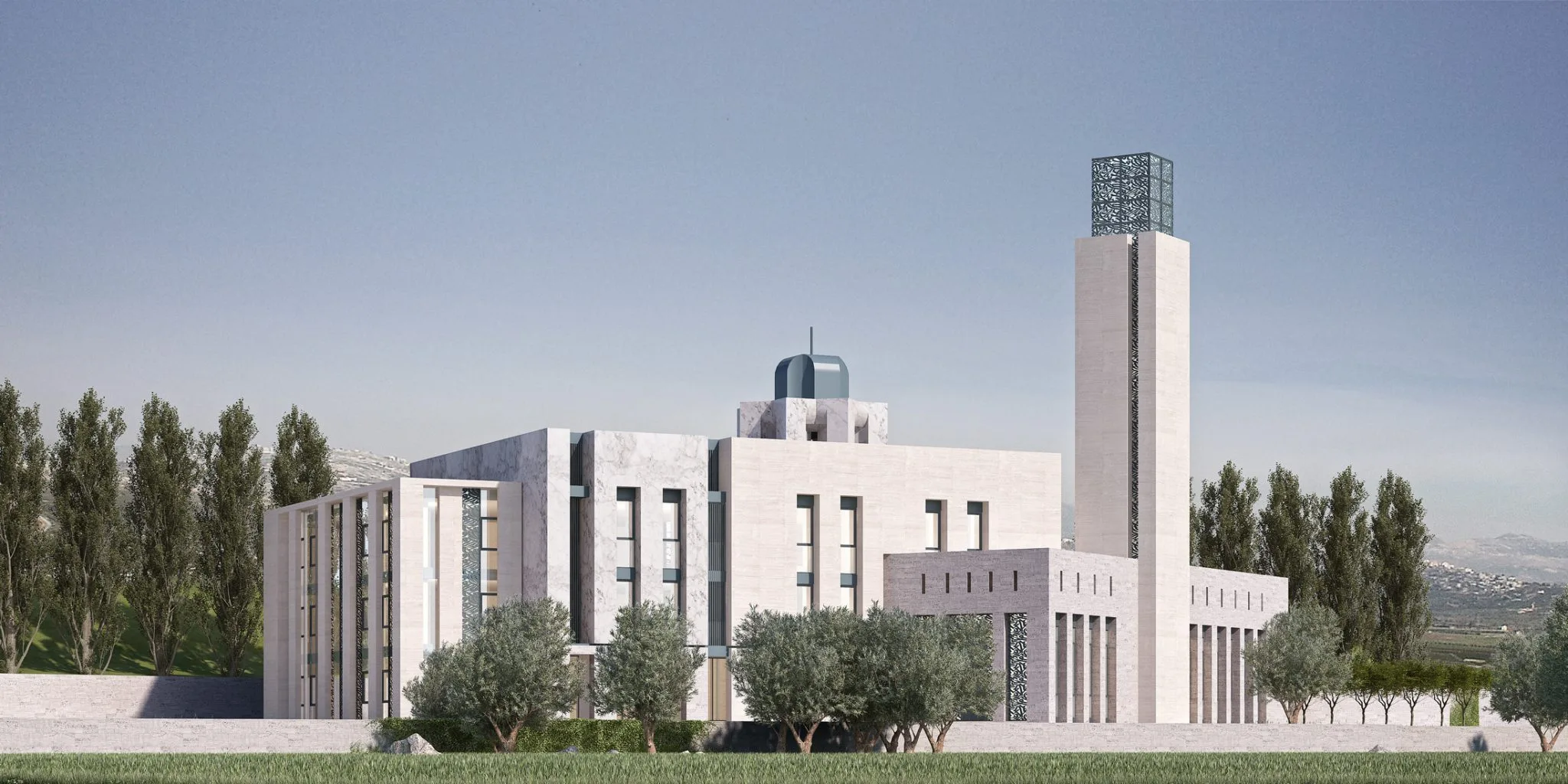
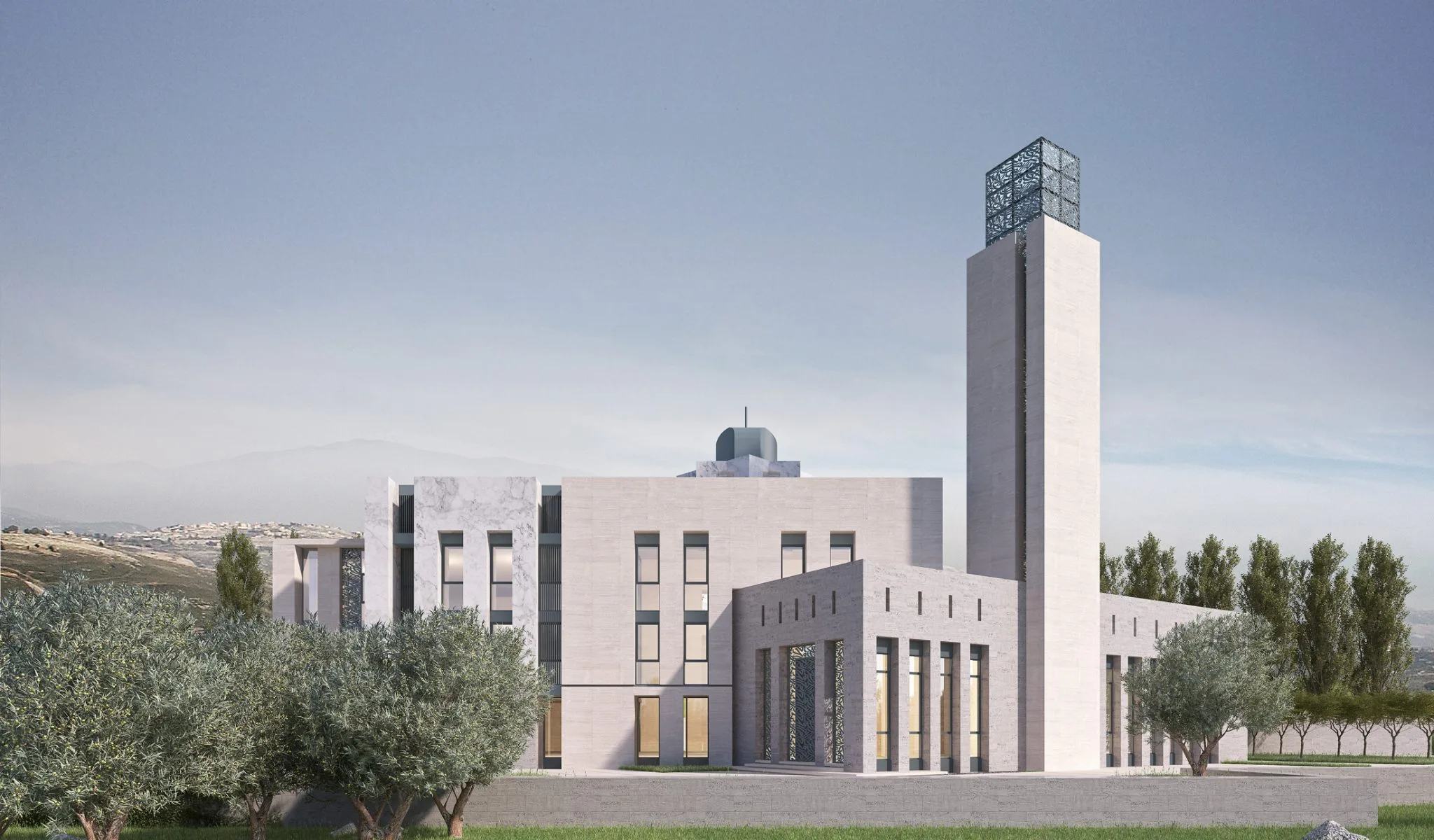
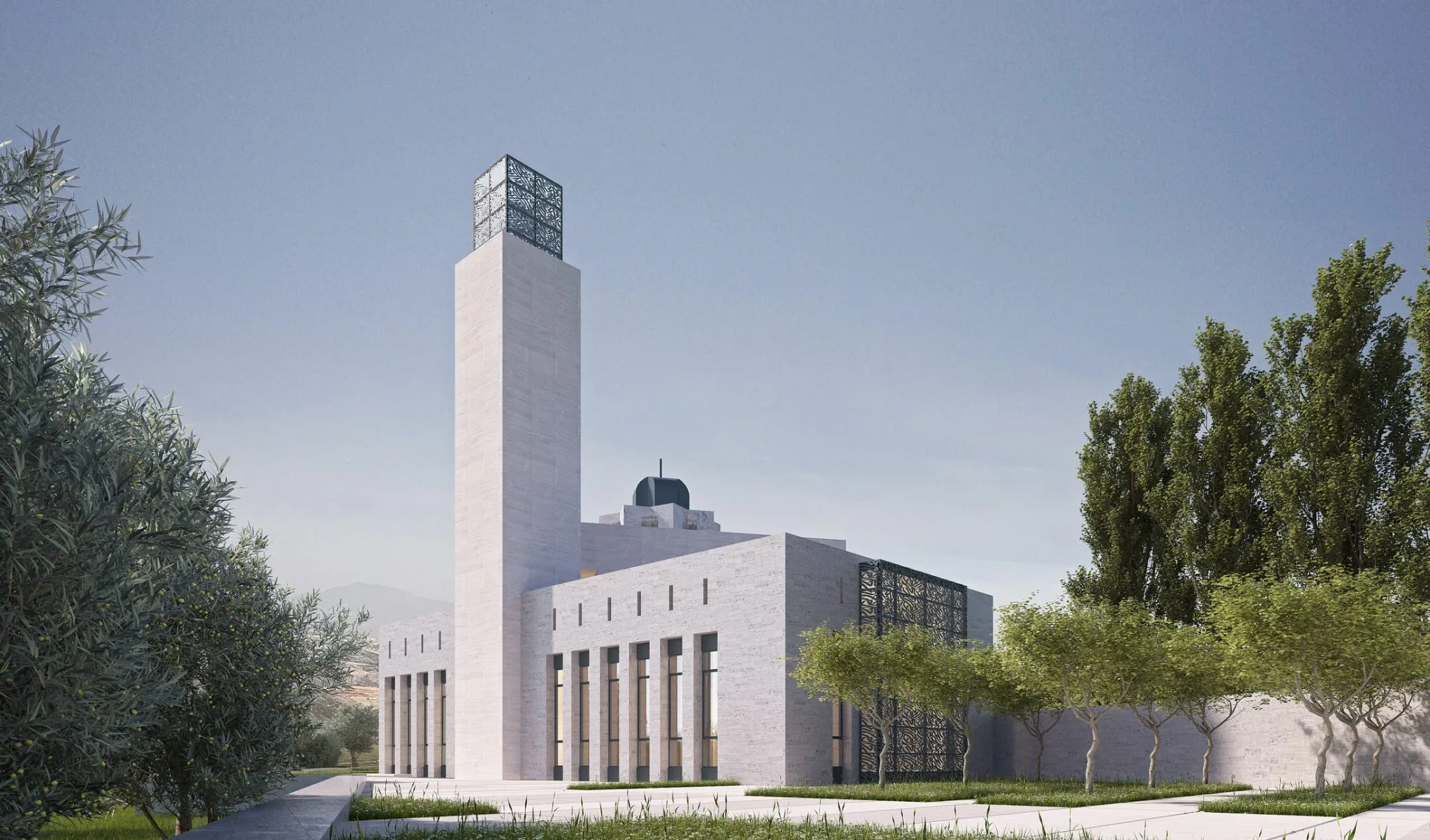
The building is composed of two interlocking rectangular volumes that clearly articulate their respective functions while forming a cohesive whole.
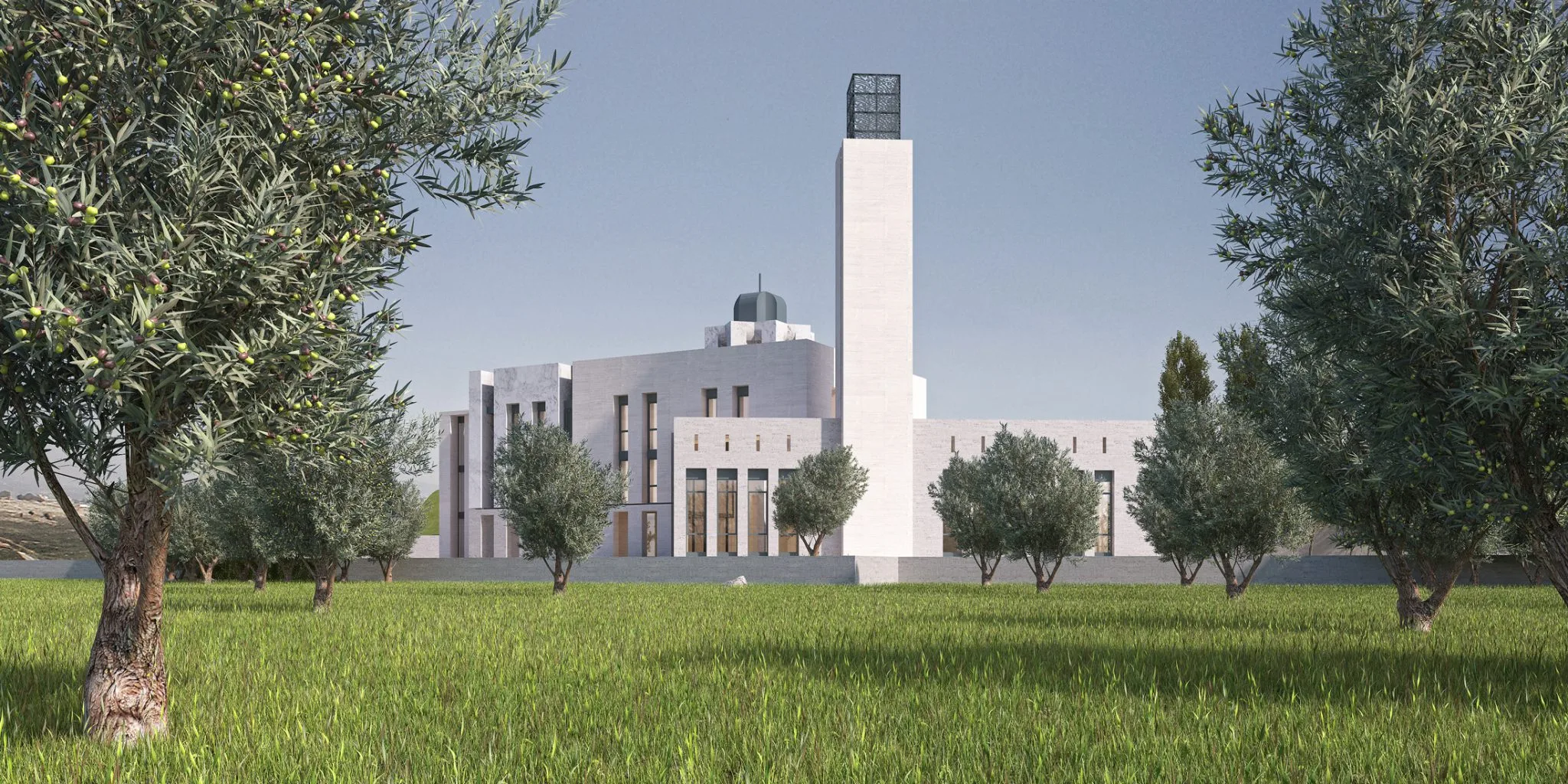
The first volume accommodates the public library, the scholar’s private office, and his grave, and is crowned by a modest dome clad in green zinc and marble, offering a subtle reference to Islamic architectural tradition.
The second volume contains the mosque and prayer hall, anchored by a white stone minaret with minimal inscriptions and contemporary detailing, acting as a vertical landmark within the village skyline.
This configuration resolves the fragmented relationship between the existing elements on site and establishes clear circulation, hierarchy, and spatial continuity.
Materiality
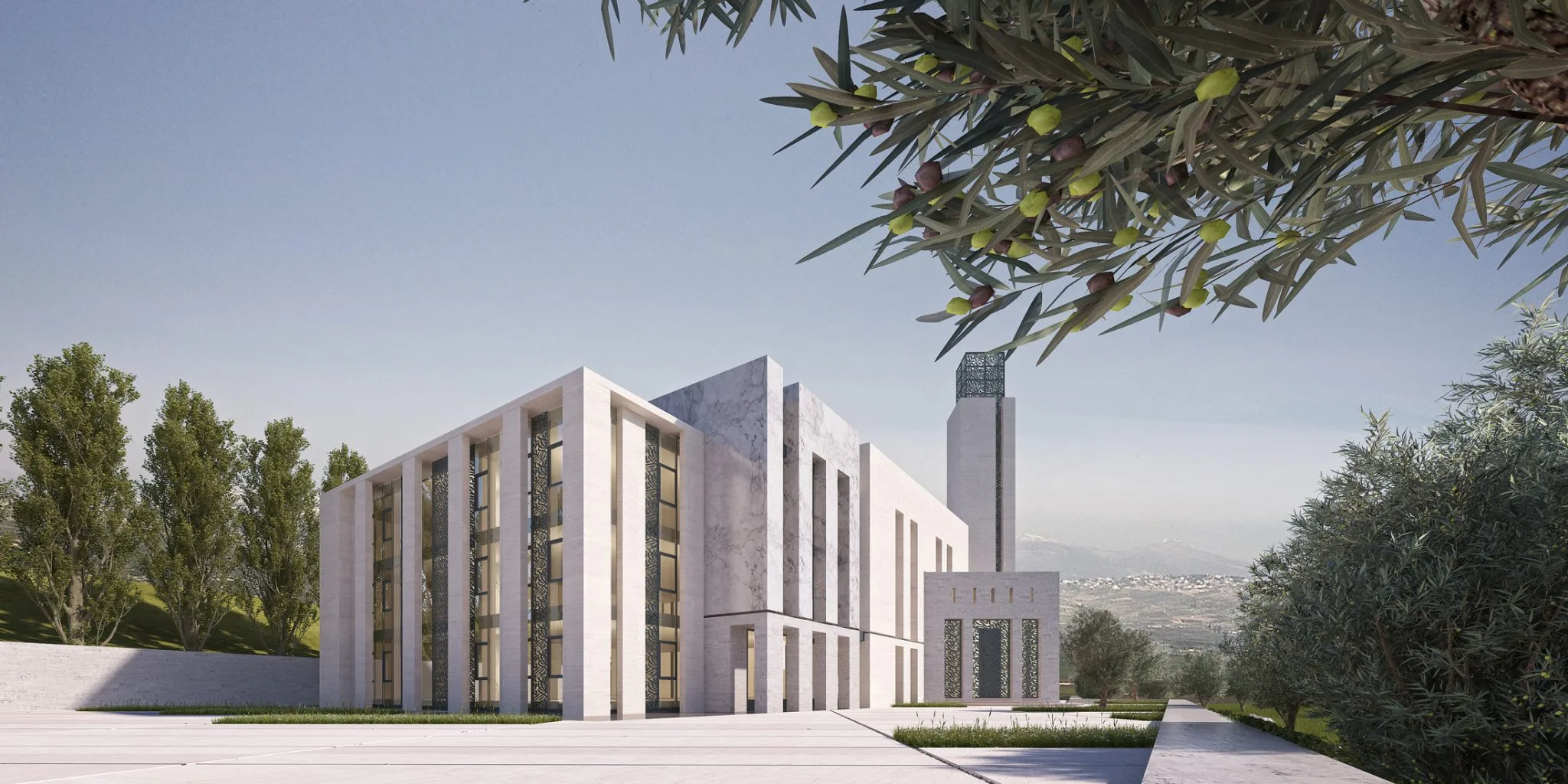
The project employs a limited material palette. White stone and marble define the exterior envelope, reinforcing notions of purity, durability, and timelessness. Accents of green zinc introduce a contemporary expression while maintaining symbolic associations with spirituality and renewal. The restrained material strategy reflects both architectural discipline and economic efficiency.
Landscape Integration
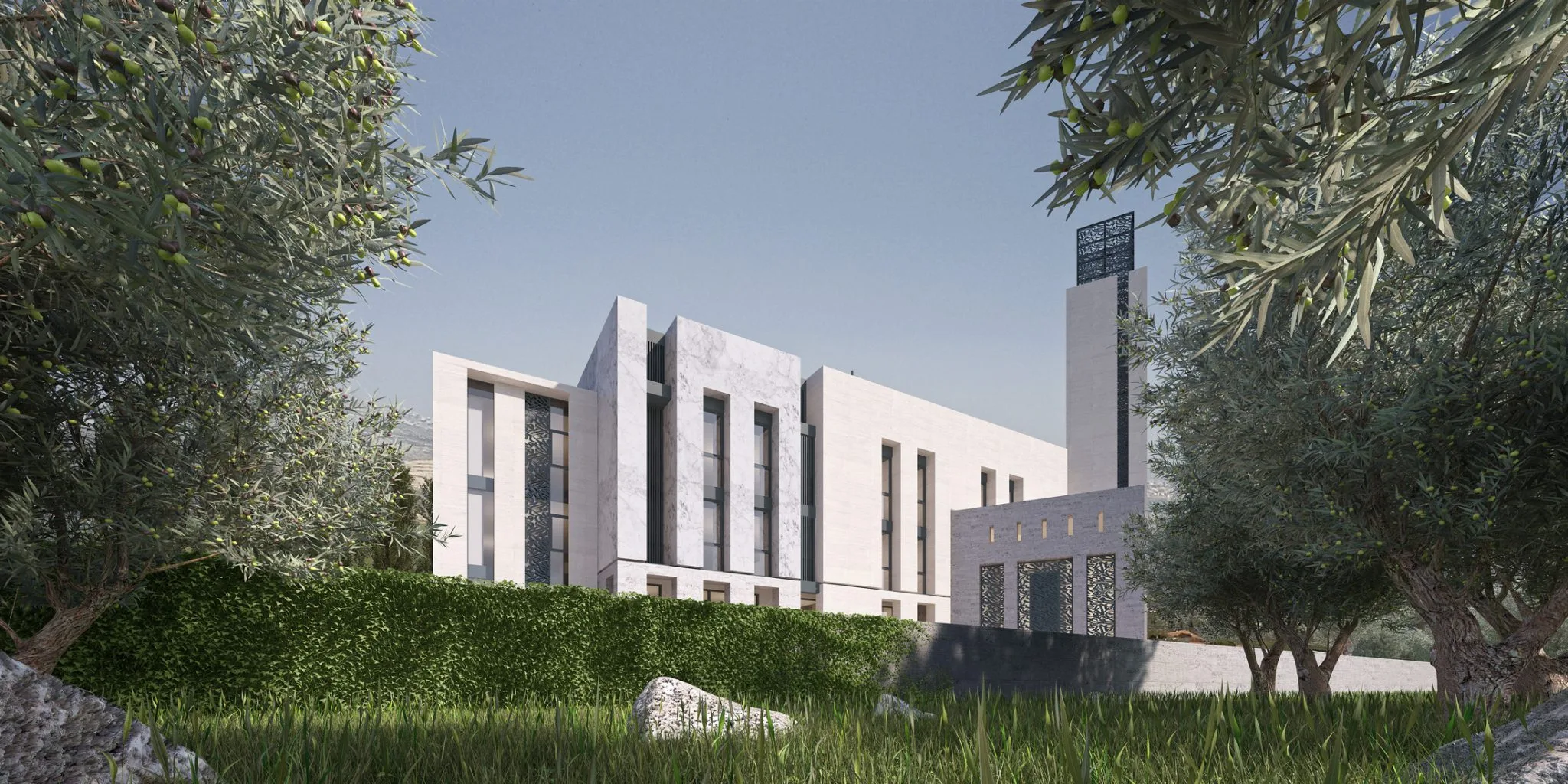
The shrine is carefully embedded within its mountainous setting. Native vegetation, particularly olive trees, softens the transition between architecture and landscape, reinforcing the contemplative atmosphere of the site. The project establishes a quiet dialogue between nature, worship, and knowledge.
Conclusion
Al Amili Shrine is an architectural expression of spiritual clarity and intellectual humility. By unifying religious, memorial, and educational functions within a disciplined architectural form, the project presents a contemporary interpretation of Islamic architecture rooted in place, memory, and meaning.